Digital shipyard – Build with confidence from engineering to execution
What a digital shipyard means in shipbuilding
In shipbuilding, complexity is normal with thousands of parts, many disciplines, tight schedules, and constant change. A digital shipyard is how you keep that complexity under control.
At its core, a digital shipyard is a digital thread that links engineering, planning, and production execution using the 3D model and connected project data as the practical interface people can trust and use. This allows teams to work with information that is current, contextual, and accessible.
The building blocks of a digital shipyard
-
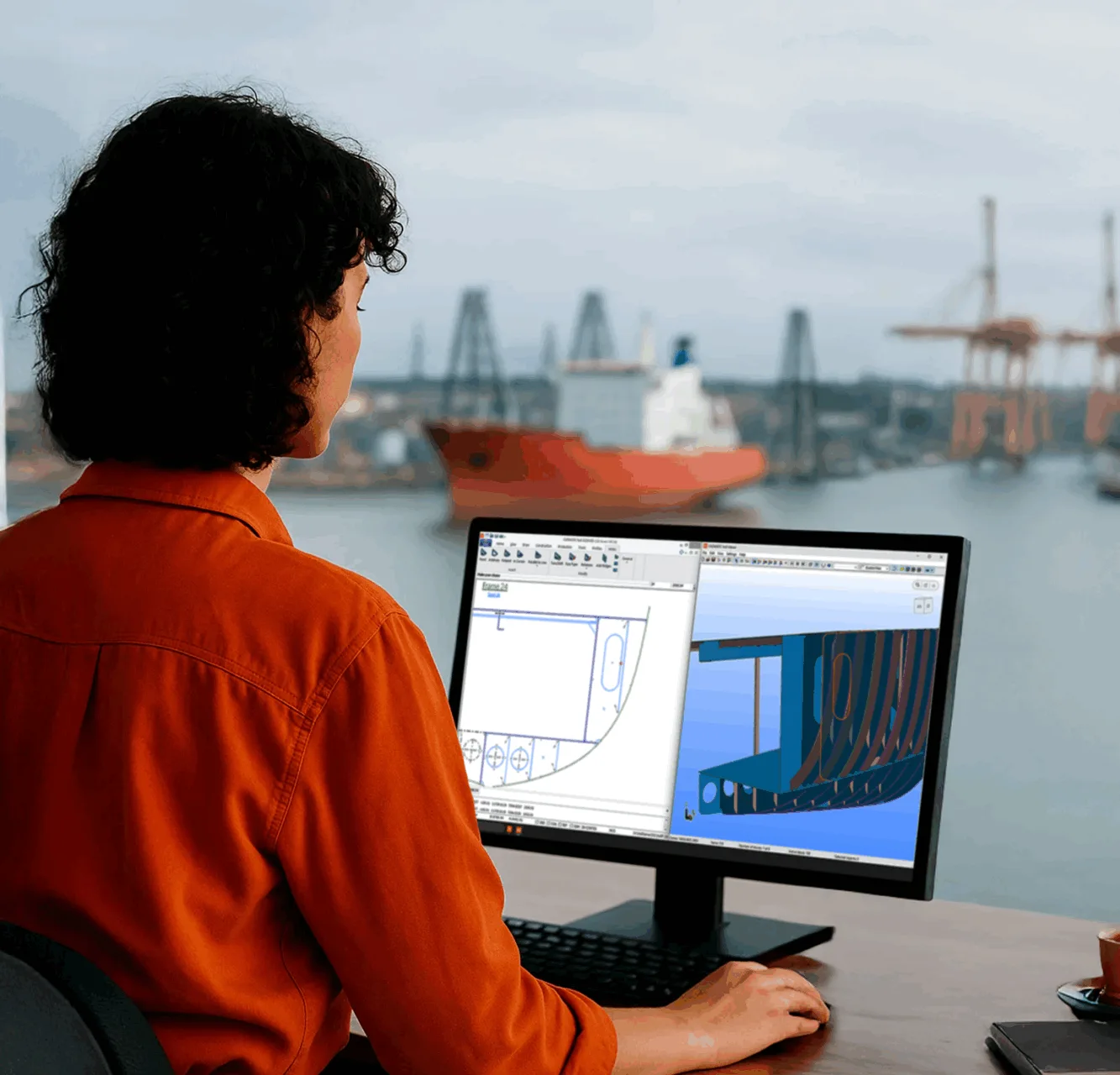
A digital backbone for shipbuilding data
Create one reliable foundation for project information including, e.g., structure, outfitting, systems, documents, and BOMs – with change control that supports the way shipyards actually work.- One trusted place for shipbuilding data across disciplines
- Clear change control so teams stay aligned when updates happen
- Consistent information for planning and production – not conflicting versions
-
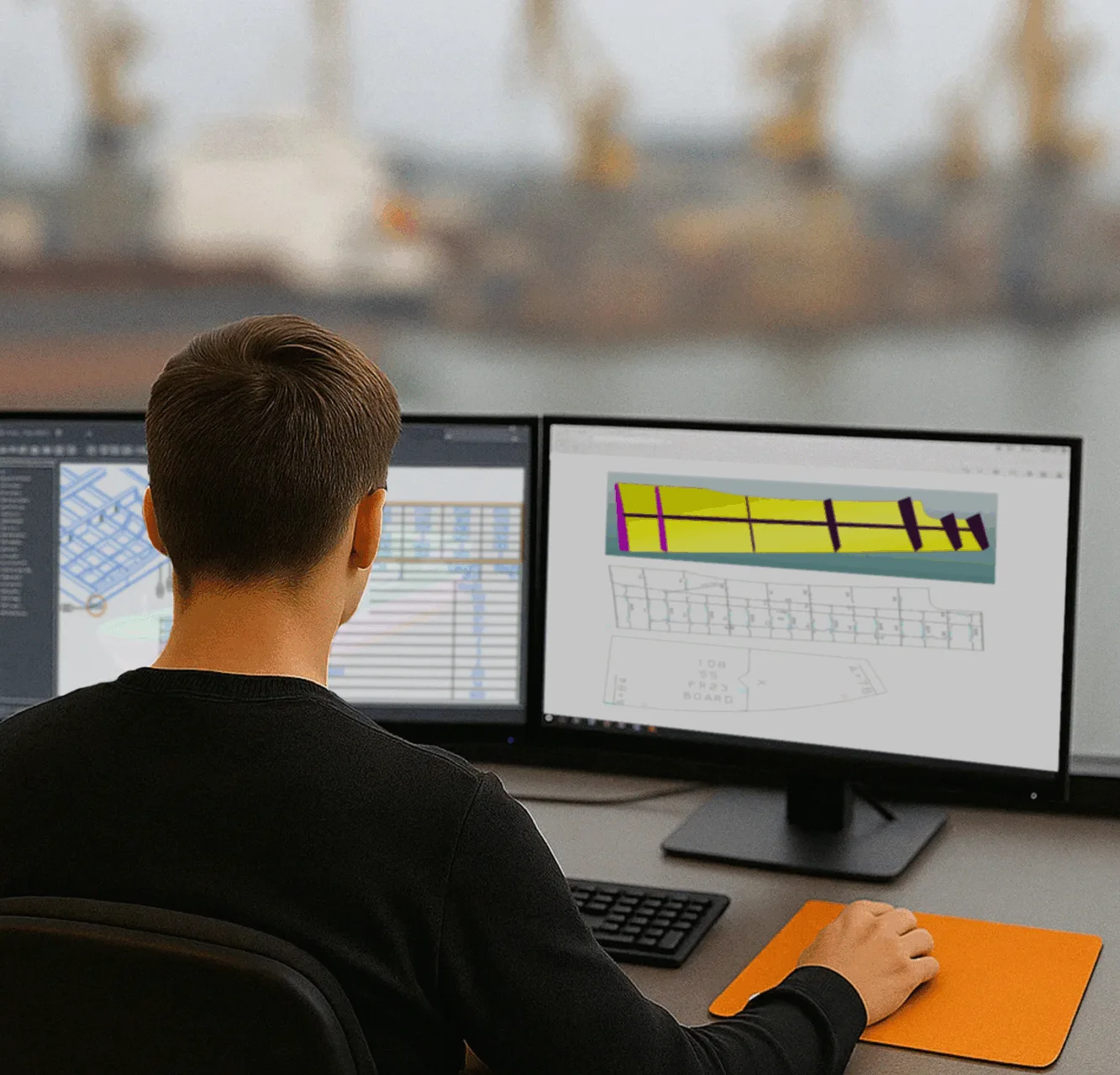
A digital thread from design to planning and production
Connect engineering outputs to planning and work packaging so production is driven by structured data and does not rely on not manual re-entry, re-checking, and “best guess” handovers.- Fewer handover gaps between engineering, planning, and production
- Faster work packaging based on current 3D and BOM information
- More reliable plans because the data stays connected end-to-end
-
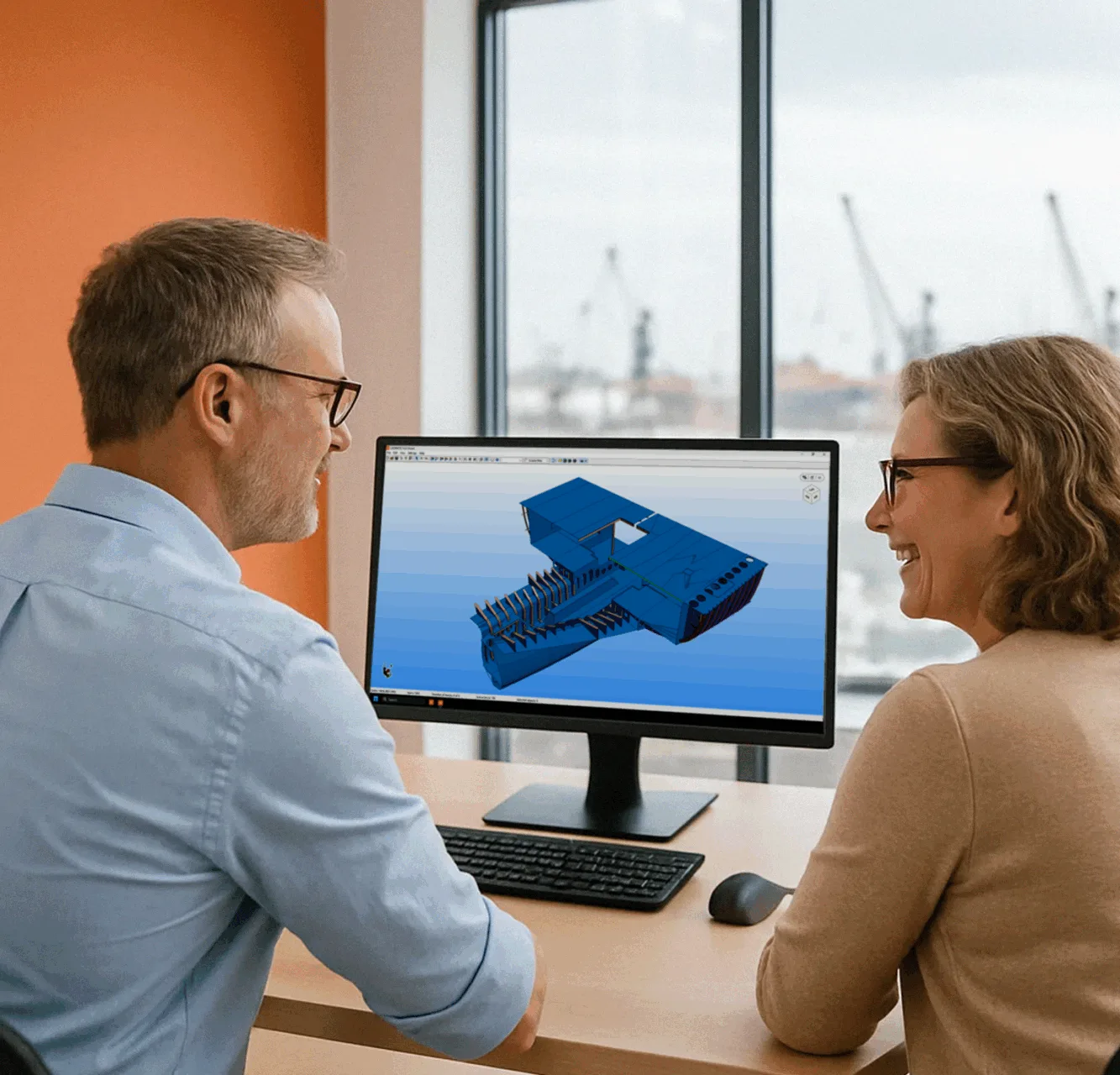
Drawingless, model-first production
Use the 3D model as the instruction set, supported by the right context around it. Help workshop teams find what they need faster, reduce interpretation errors, and cut avoidable rework.- Model-first access to the right information in context
- Less time spent searching, interpreting, and clarifying drawings
- Fewer avoidable errors and rework on the shopfloor
-
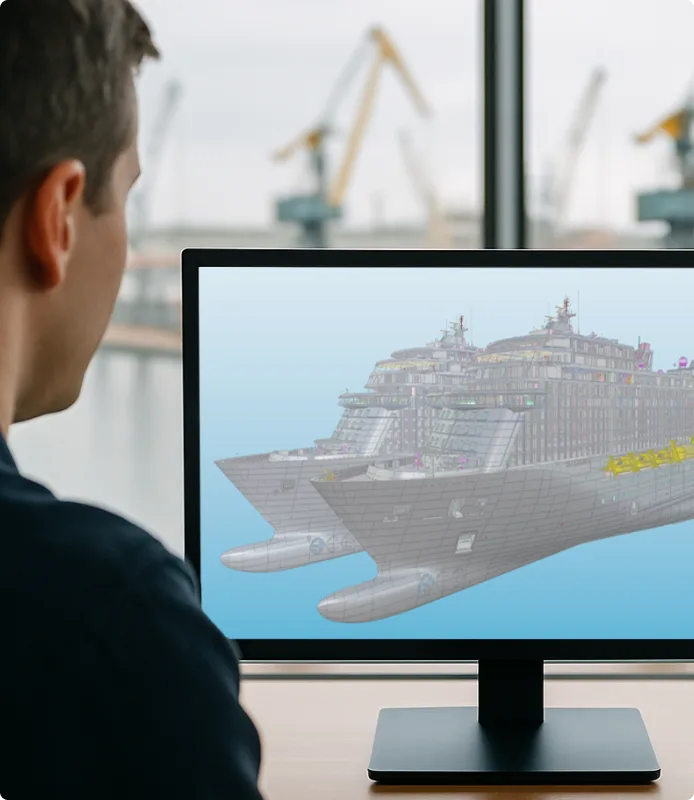
Visibility and feedback loops
Make progress and deviations visible across teams so planning stays realistic and engineering stays aligned to what is happening on the shop floor.- Shared visibility into progress, issues, and deviations
- Earlier decisions when risks appear – not after delays accumulate
- A clearer path from “as-planned” to “as-built” consistency
How it works in practice
-
Design and engineer with production in mind
Build structured project information early and keep it consistent as the project evolves. When engineering changes, the impact is clear and downstream teams are not surprised.
-
Plan and package work using connected data
Turn 3D and BOM information into work packages, material readiness views, and production plans that match your build strategy and constraints. Keep plans current so production is not working from outdated snapshots.
-
Build and stay aligned
Give production teams easy access to the right information at the right moment, directly in context of the 3D model, rather than through disconnected drawings and folders. Capture status and issues as work progresses so the project stays current.
Why digital shipyards are hard to achieve
Most shipyards don’t struggle because they lack data. They struggle because the data is not connected in a way people can use. Common blockers include:
- Breaks in the information flow between engineering, planning, and production
- Multiple systems and multiple versions of the truth
- Late changes that affects schedules, cost, and rework
- Adoption challenges when people must fight tools instead of being supported by them
A digital shipyard program succeeds when it respects shipyard reality and improves daily work step by step.

Where Cadmatic fits in
Cadmatic helps shipyards and ship design companies move toward a digital shipyard by making model-based, data-driven shipbuilding practical.
We focus on what matters on the ground:
- Connecting project information so teams can trust and reuse it
- Supporting drawingless and model-first workflows where it makes sense
- Bridging design, planning, and production needs without forcing a single-vendor world
- Integrating with the systems you already rely on, so progress is achievable and scalable
Ready to take the next step?
A digital shipyard is not a single project. It’s a practical path toward fewer handover gaps, better production predictability, and less rework.
Frequently Asked Questions
What is a digital shipyard?
A digital shipyard is a shipbuilding facility that uses connected digital tools and data across the entire build process, from design through engineering, production planning and construction. The goal is to replace disconnected paper-based workflows with a shared digital environment where design data, production schedules, and build status stay in sync – so people work from trusted, current information and changes propagate predictably.
What is a smart shipyard?
A smart shipyard uses integrated digital systems to manage ship design, production planning, material logistics, and construction progress in a connected way. Rather than relying on printed drawings and manual coordination, teams work from a shared digital model that reflects the current state of the project.
What does it mean when a shipyard becomes a smart shipyard?
A smart shipyard is one that has connected its engineering, production, and operational systems so that data flows between them rather than being re-entered manually at each stage. This means design changes flow automatically into production planning, and build progress is tracked against the digital model in real time.
Is a digital shipyard the same as a smart shipyard?
They overlap. “Digital shipyard” often emphasizes the data backbone and digital thread. “Smart shipyard” often emphasizes automation, real-time visibility, and connected operations. In practice, many shipyards pursue both – starting with connecting information, then expanding into smarter execution.
Does a digital shipyard require drawingless production?
Not on day one. Many shipyards start by improving access to model-based information and reducing drawings where it delivers fast value. The goal is not “no drawings” – it’s fewer avoidable drawings and better decisions.
What systems are typically involved?
A digital shipyard usually spans engineering tools and project data management, planning and work packaging, and production execution – and integrates with enterprise systems such as ERP and, where relevant, PLM and MES. The most important part is not the number of systems – it’s whether they are connected in a usable way.
Discover related products



Explore more digital shipyard resources


Subscribe to our newsletter
Stay up to date on the latest news, product updates, and insights – delivered straight to your inbox. Subscribe and never miss what matters.