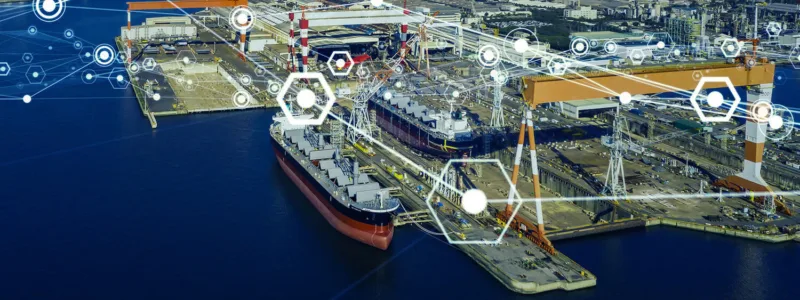
Digital fabrication yard – Build with confidence from engineering to load-out
What a digital fabrication yard means for offshore and industrial projects
In fabrication yards, complexity comes from thousands of components, changing engineering data, material availability, subcontractor interfaces, welding and inspection requirements, tight delivery windows, and heavy-lift or load-out milestones. A digital fabrication yard helps keep that complexity under control.
At its core, a digital fabrication yard is a connected digital thread that links engineering, materials, planning, work packaging, production, quality, and progress reporting. The 3D model and connected project data become a practical interface that teams can trust – from office to workshop, assembly area, coating line, inspection point, and quayside.
Digital fabrication yard benefits
-
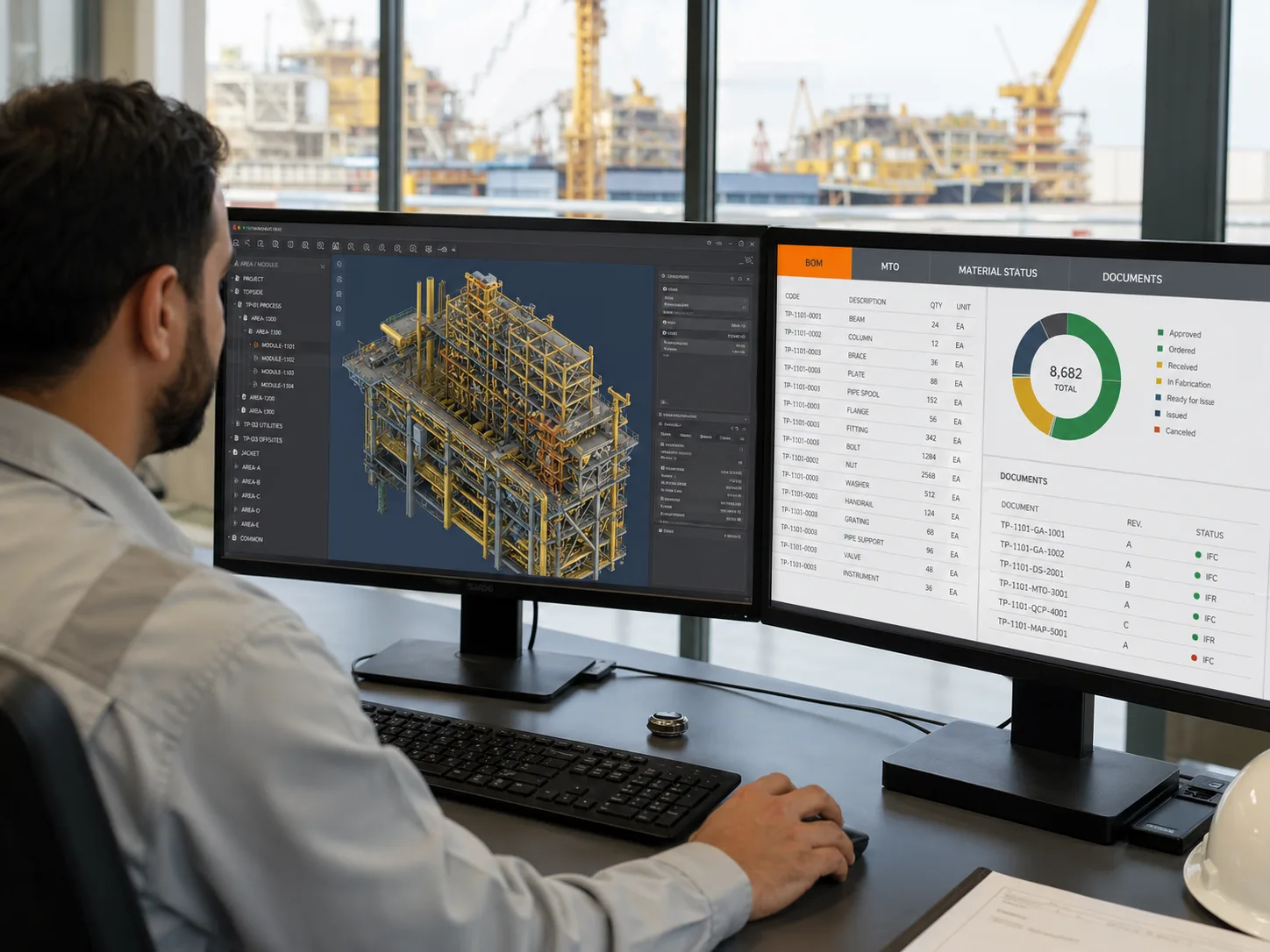
A digital backbone for fabrication project data
Create one reliable foundation for project information – including 3D models, structures, pipe spools, equipment, E&I data, documents, BOMs, MTOs, material status, and quality records – with change control that supports the way fabrication yards actually work.- One trusted place for fabrication data across disciplines, areas, and subcontractors
- Clear change control when engineering updates affect materials, work packs, or fabrication sequence
- Consistent information for planning, production, QA/QC, and client reporting
-
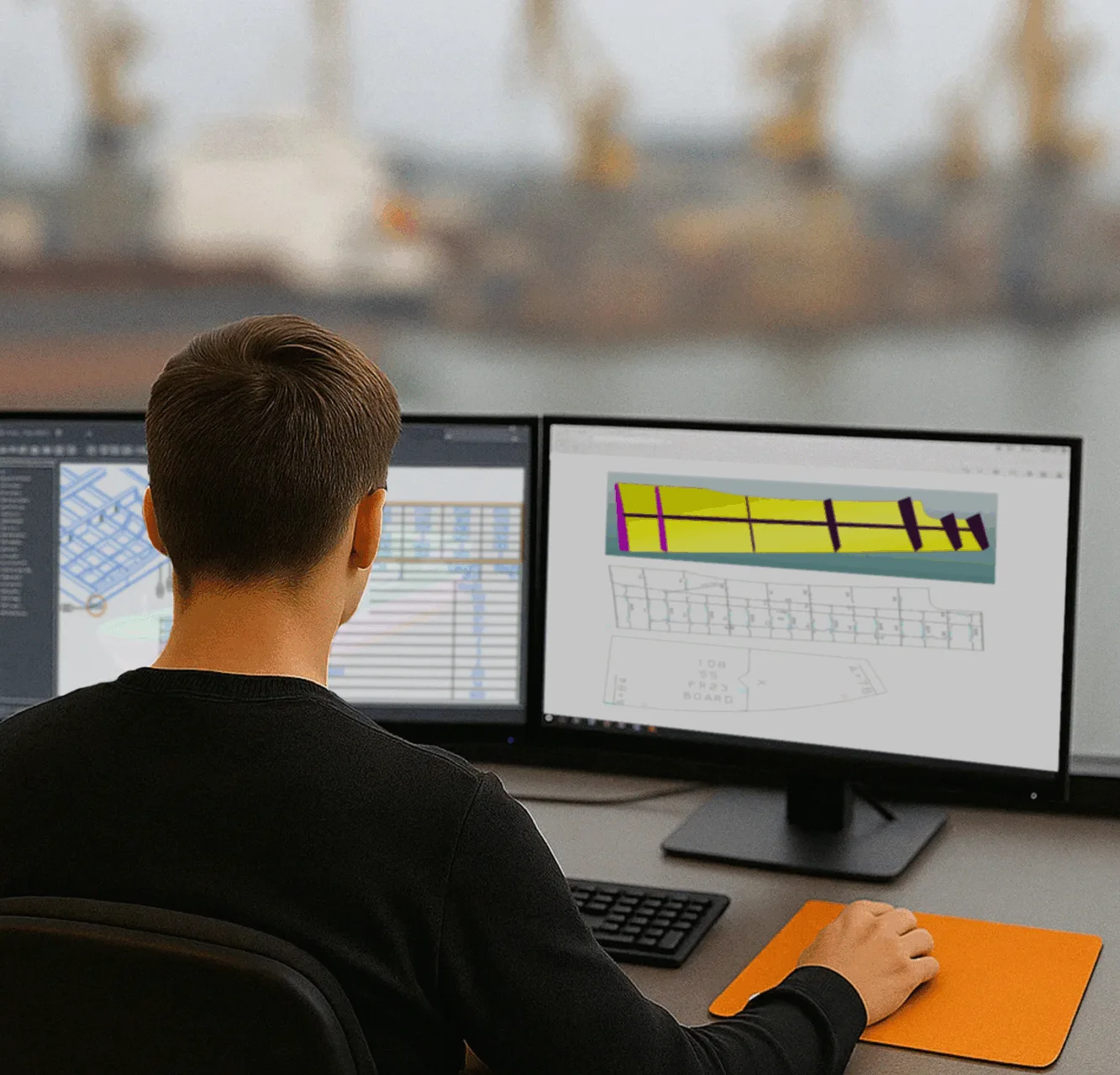
A digital thread from engineering to work packs and production
Connect engineering outputs to fabrication planning, material readiness, work packaging, and production execution so teams do not rely on manual re-entry, re-checking, and “best guess” handovers.- Fewer handover gaps between engineering, procurement, planning, production, and QA/QC
- Faster work packaging based on current 3D, BOM, material, and spool information
- More reliable plans because engineering changes, material status, and production progress stay connected
-
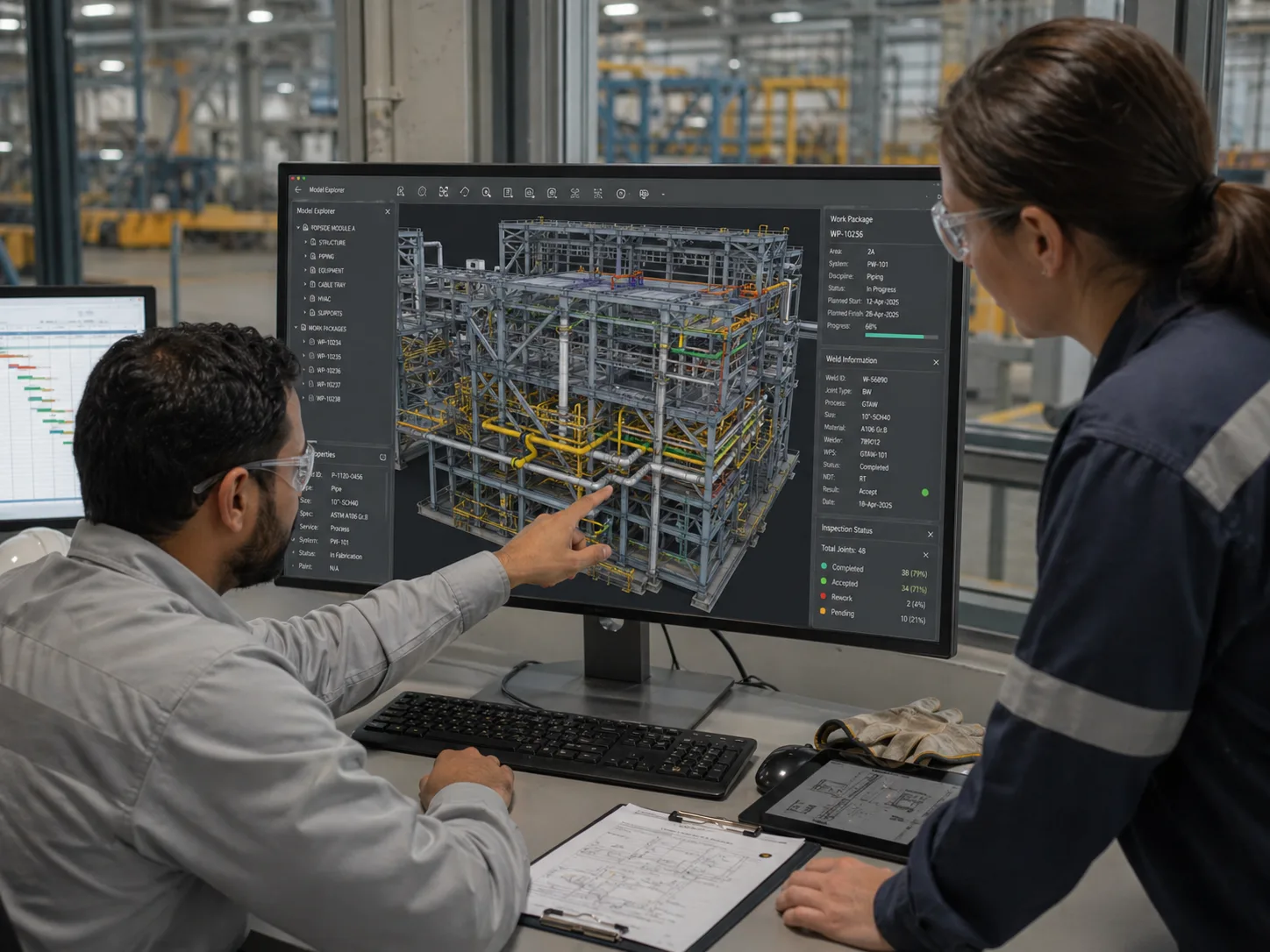
Model-first fabrication where it creates value
Use the 3D model as a practical interface for fabrication, supported by the right documents, material data, weld information, inspection status, and work package context. Help workshop and yard teams find what they need faster and reduce interpretation errors.- Model-first access to fabrication information in context
- Less time spent searching through drawings, spreadsheets, folders, and disconnected reports
- Fewer avoidable errors, delays, and rework in fabrication and assembly
-
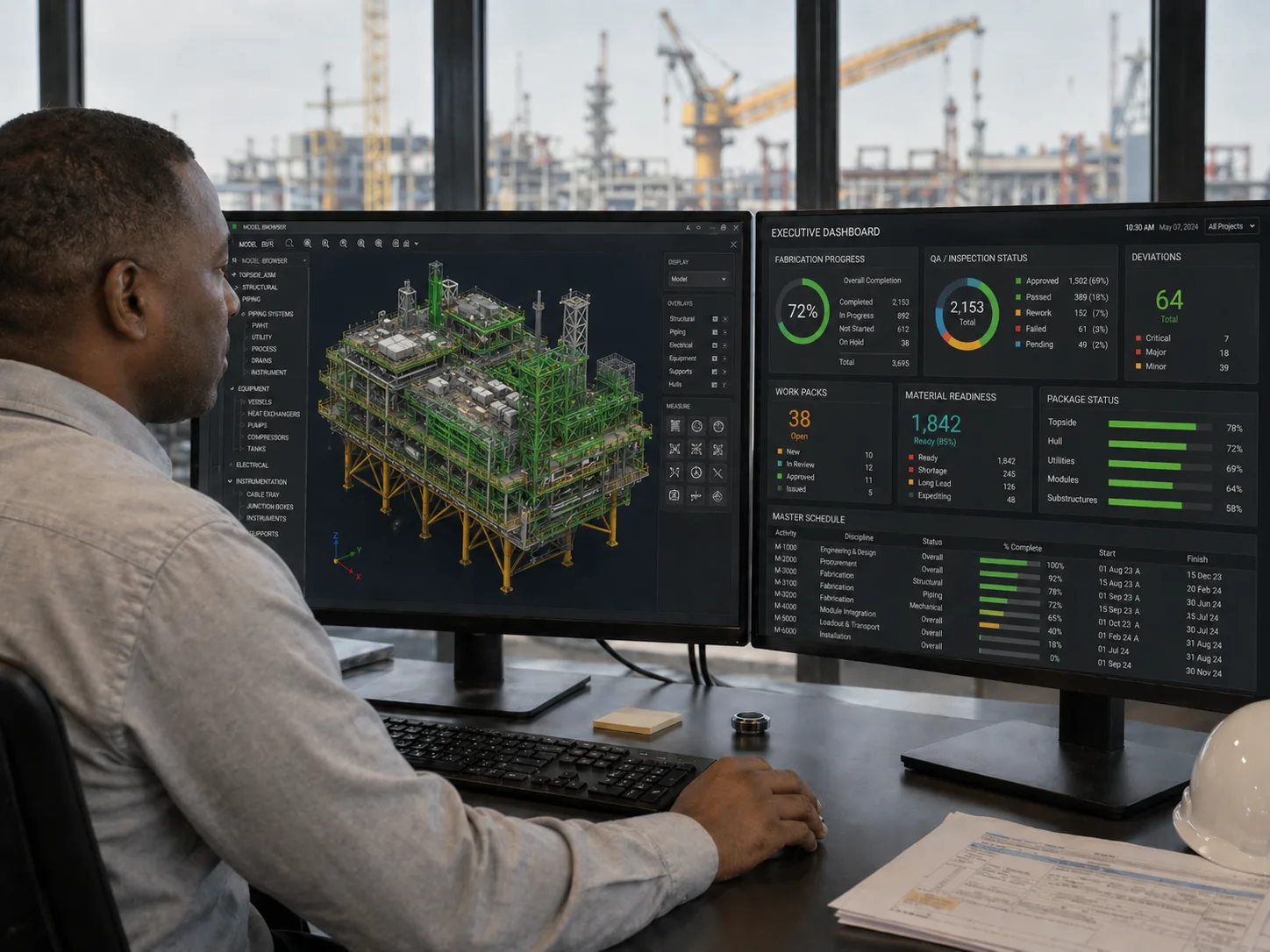
Progress, quality, and change visibility
Make progress, constraints, deviations, and quality status visible across teams so planning stays realistic and engineering, procurement, production, and QA/QC stay aligned with what is happening in the yard.- Shared visibility into progress, material constraints, issues, inspections, and deviations
- Earlier decisions when risks appear – before delays reach assembly or load-out
- A clearer path from “as-designed” to “as-built” documentation and handover
The A-Z of a digital fabrication yard
-
Engineer with fabrication and assembly in mind
Build structured project information early and keep it consistent as the project evolves. When engineering changes, the impact on materials, work packs, fabrication sequence, and quality documentation is easier to understand before it creates disruption in the yard. -
Plan work packs using connected engineering
Turn 3D, BOM, MTO, material, and spool information into work packages, material readiness views, and production plans that match yard capacity, fabrication sequence, subcontractor scope, and load-out milestones. -
Fabricate, inspect, and stay aligned
Give fabrication, assembly, and QA/QC teams easy access to the right information at the right moment, directly in context of the 3D model and connected project data.
Why it’s difficult for some fabrication yards to digitalize
Most fabrication yards do not struggle because they lack data. They struggle because engineering, procurement, planning, production, and quality data are not connected in a way people can use in daily work.
Common blockers include:
- Breaks in the information flow between engineering, procurement, planning, production, and QA/QC
- Multiple systems, spreadsheets, document folders, and client portals creating multiple versions of the truth
- Late engineering changes that affect materials, work packs, welds, inspections, schedules, and cost
- Material readiness problems that only become visible when work should already be starting
- Manual progress reporting that gives management an outdated view of yard reality
- Adoption challenges when digital tools add work instead of supporting the way fabrication teams actually operate
A digital fabrication yard program succeeds when it respects yard reality, connects the systems people already use, and improves daily work step by step.
Where Cadmatic fits in
Cadmatic helps fabrication yards, EPCs, and engineering teams move toward model-based, data-driven fabrication by connecting project information from engineering to planning, production, quality, and handover.
We focus on what matters on the ground:
- Connecting 3D models, documents, BOMs, materials, and project information so teams can trust and reuse data
- Supporting model-first fabrication workflows where they create practical value
- Bridging engineering, procurement, planning, production, and QA/QC without forcing a single-vendor world
- Integrating with the systems you already rely on so digitalization is achievable, scalable, and easier to adopt
With Cadmatic, fabrication yards can create a more reliable digital thread across project phases, disciplines, and teams – helping people work with information they can trust.
Ready to take the next step?
A digital fabrication yard is not a single project. It is a practical path toward fewer handover gaps, better material and production visibility, stronger quality control, and less rework.
Frequently Asked Questions
What is a digital fabrication yard?
A digital fabrication yard is a fabrication environment where engineering data, materials, work packages, production progress, and quality information are connected so teams work from trusted, current information.
It helps reduce manual handovers, improve traceability, and give teams better visibility from engineering through fabrication, inspection, assembly, and load-out.
Is a digital fabrication yard the same as a smart yard?
They overlap, but they are not exactly the same.
A digital fabrication yard usually starts with connected data, model-based workflows, and a reliable digital thread across engineering, planning, production, and quality. A smart yard often adds automation, sensors, real-time monitoring, and advanced analytics.
In practice, many yards need the digital foundation first before advanced automation can deliver full value.
Does a digital fabrication yard require drawingless production?
No. Fabrication yards often still need drawings, isometrics, weld maps, inspection documentation, and client-approved deliverables.
The goal is not to eliminate every drawing from day one. The goal is to give teams easier access to trusted model-based information and reduce unnecessary manual interpretation, duplicated documents, and outdated information.
What systems are typically involved in a digital fabrication yard?
A digital fabrication yard can involve engineering design tools, document management, materials and procurement systems, planning and work packaging tools, ERP, production execution, QA/QC systems, and progress reporting.
The most important factor is not the number of systems – it is whether the data is connected in a way teams can use in daily work.
How can fabrication yards start digitalizing without replacing every system?
Most yards should start by connecting the data and workflows that cause the most friction: engineering changes, material readiness, work packaging, production progress, and quality documentation.
A practical digitalization roadmap should integrate with existing systems where possible and focus on improvements that teams can adopt step by step. The aim is not to replace everything at once, but to create a connected foundation that improves daily work and can scale over time.



Subscribe to our newsletter
Stay up to date on the latest news, product updates, and insights – delivered straight to your inbox. Subscribe and never miss what matters.