Five days to one – how Enpro Industries speeds up isometric drawings with Cadmatic
Enpro Industries designs complex skid systems faster and with fewer errors
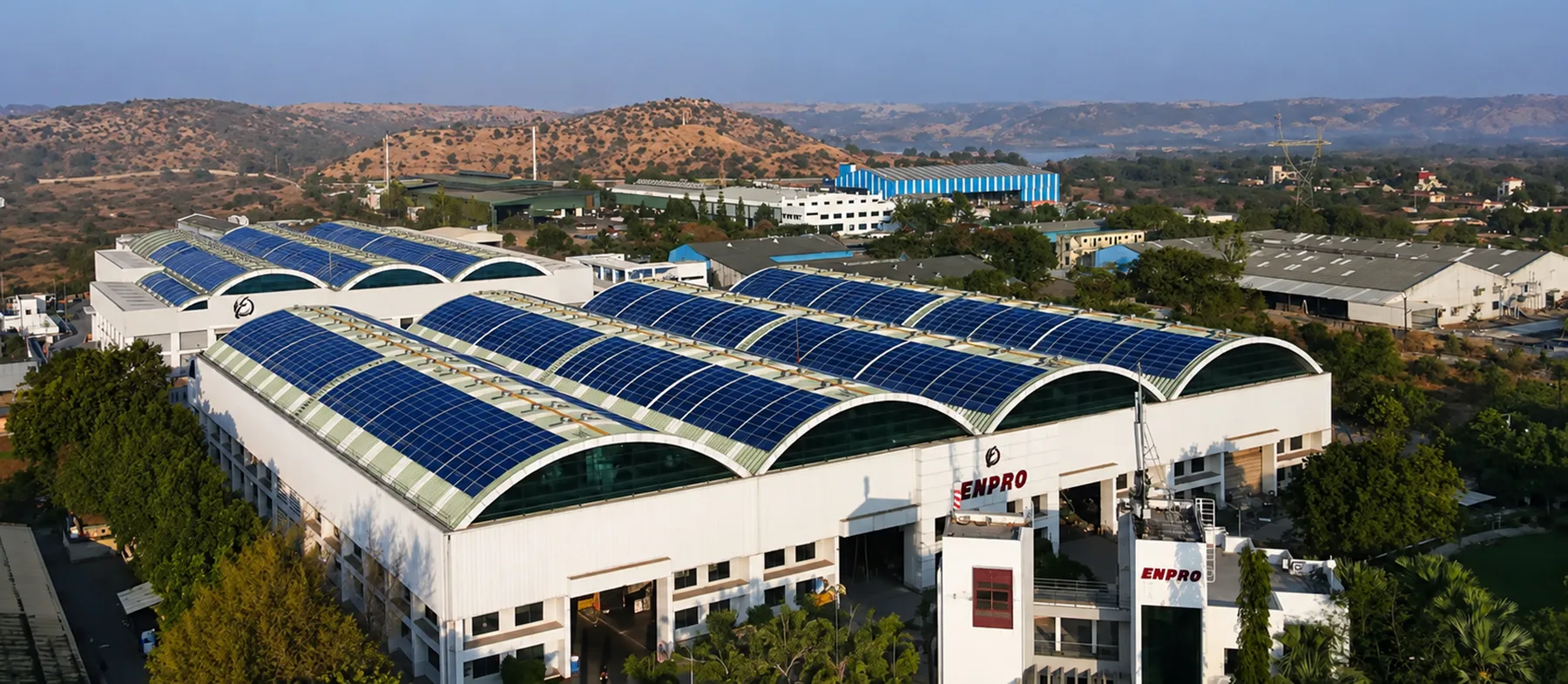
Enpro Industries is a family-owned engineering company based in Pune, India, that has spent close to four decades designing and manufacturing mechanical fluid systems and process equipment for industries including energy, oil and gas, power, and petrochemicals, with more than 4,000 systems delivered across 50 countries.
Through Cadmatic 3D Plant Design, P&ID, and eBrowser, Enpro’s System Engineering Division now completes isometric drawings within a day, work that used to take five to six days, while catching design errors before they reach the shop floor.
“With Cadmatic, we’ve cut isometric drawing time from days to hours, and catch design errors before they reach the shop floor.”
Anuj Karkare
Deputy Managing Director, Enpro Industries
Cadmatic use in a nutshell
Customer challenge
- Rising pressure to cut design errors and shorten 3D modelling time
- Isometric drawings take five to six days to produce
- Clashes surfacing on the shop floor instead of on the drawing board
- No direct link between the P&ID and the 3D model, so miss-outs could slip through
- Manual verification between design data and SAP codes
Cadmatic solution
- Cadmatic 3D Plant Design, Cadmatic P&ID, and Cadmatic eBrowser
- Automated isometric generation, ready within a day
- Interference detection, with piping supports, tubing, and insulation modelled directly in 3D
- Bi-directional checking between the P&ID and the 3D model
- SAP codes mapped to Cadmatic library components for faster BOM creation
Embracing change after twelve years on one platform
In late 2023, after more than a decade on the same software platform, Enpro’s engineering leadership ran an internal review of challenges they were facing.
They identified three key areas:
- Too many human errors making it through to fabrication
- Too much designer time spent on routine 3D modelling
- Inconsistent accuracy across projects
To address these challenges, the team set clear requirements and evaluated several software solution alternatives through detailed demonstrations.
According to Enpro, Cadmatic stood out, in part because it supports the same kind of piping-heavy, standards-driven engineering that Enpro’s skids and process equipment demand.
Proof of concept and live pilot before going all in
In early 2024, detailed demonstrations and a successful proof of concept with the Cadmatic team led Enpro to procure Cadmatic 3D Plant Design, Cadmatic P&ID, and Cadmatic eBrowser. The software implementation was structured to run training and customization in parallel, including the development of templates, libraries, and standardized components to support faster, more consistent design work.
User training covered day-to-day design operations, while admin training covered configuration, customization, and system management. Enpro opted for offline sessions with a small group of team members first, to keep disruption to ongoing projects to a minimum.
Every training session run by the Cadmatic team was recorded via Microsoft Teams, creating a reference library that new users can draw on for self-paced learning, alongside direct mentoring from colleagues who went through the process first.
A separate but equally important workstream mapped Enpro’s SAP codes to Cadmatic’s library components. That integration streamlined bill of materials creation and simplified verification. According to Prithviraj Jadhav, Team Lead, System Engineering Division, this has already reduced manual effort and improved data consistency.
“Before committing to full deployment, we ran a live pilot on a small dosing skid. With support from the Cadmatic team, the group completed the 3D modelling, generated 2D drawings, and extracted isometric views. The pilot proved the software’s capabilities and gave us a chance to fine-tune workflows before rolling out more widely, Jadhav explains.
Rolling out without slowing down live projects
The full deployment of Cadmatic followed a phased rollout, onboarding users in small batches to avoid disrupting ongoing work. The earlier phases, library development, training, and the pilot, laid the foundation, after which new users were brought on board to build their confidence in the Cadmatic environment.
“We wanted to genuinely test Cadmatic on a hard case, so we picked a project we had already built with the previous software, specifically because of its demanding modelling requirements. Cadmatic handled the intricate piping, tubing supports, and cable trays involved well, which reinforced the team’s confidence in the platform,” says Jadhav.

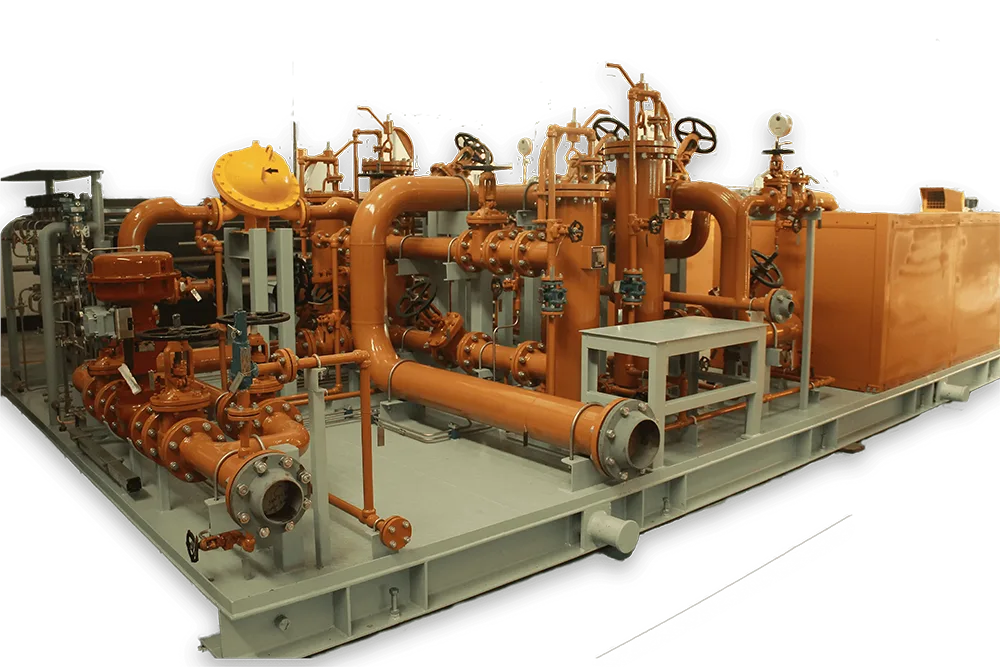
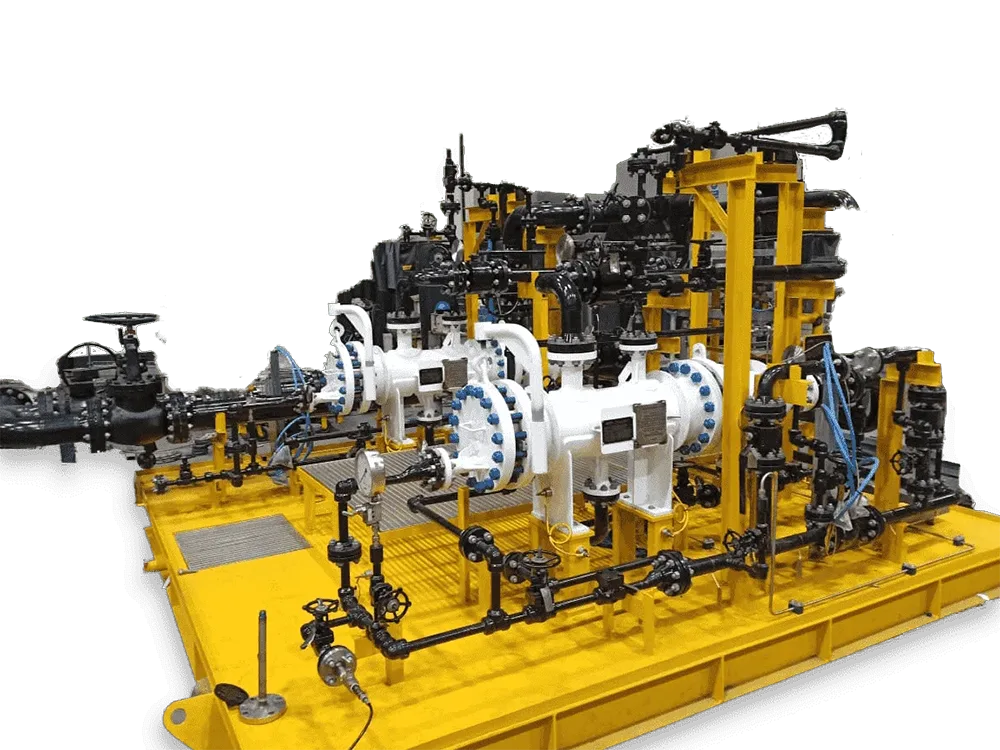
As more users came on board, the division applied Cadmatic across a growing range of work: engineered skid systems including tank-mounted and base-frame mounted lube-oil systems, an air-cooled heat exchanger with platform, and a multi-skid cooling water system that included interconnecting piping to customer-supplied equipment, piping to an overhead tank, and underground piping design. It was a genuinely complex scope, and a robust test of both the software and the team’s adaptability.
“Having completed several projects, we feel confident and satisfied with our progress,” says Jadhav. “The successful execution of these designs has validated our decision to adopt Cadmatic and reinforced our belief in its potential to elevate our engineering standards.”
What changed on the drawing board
Cadmatic’s interference detection now flags clashing or overlapping components as soon as they appear in the 3D model, rather than after fabrication. Piping supports, tubing, and insulation appear directly in the model and its isometrics, so clash detection happens early enough to matter, and identical systems can be reproduced reliably on the shop floor. Because the P&ID and 3D model are linked in both directions, the team can check one against the other and catch miss-outs before they turn into costly rework.
Cadmatic’s inbuilt work sharing capabilities have increased project efficiency.
“Multiple people can now work on the same project at once, which has sped up model development and made coordination across the team more straightforward.”
Isometric drawings, which used to take five to six days on the previous platform, are now ready within a day, with pipe diameters captured directly in the drawing rather than added by hand afterward. Cadmatic also generates reports and drawings automatically and pulls material data straight from the 3D model, which has simplified the documentation Enpro needs for procurement, including equipment nozzle material lists that before relied solely on isometric drawings.