GONDAN models 95 percent of a ship and production builds straight from it
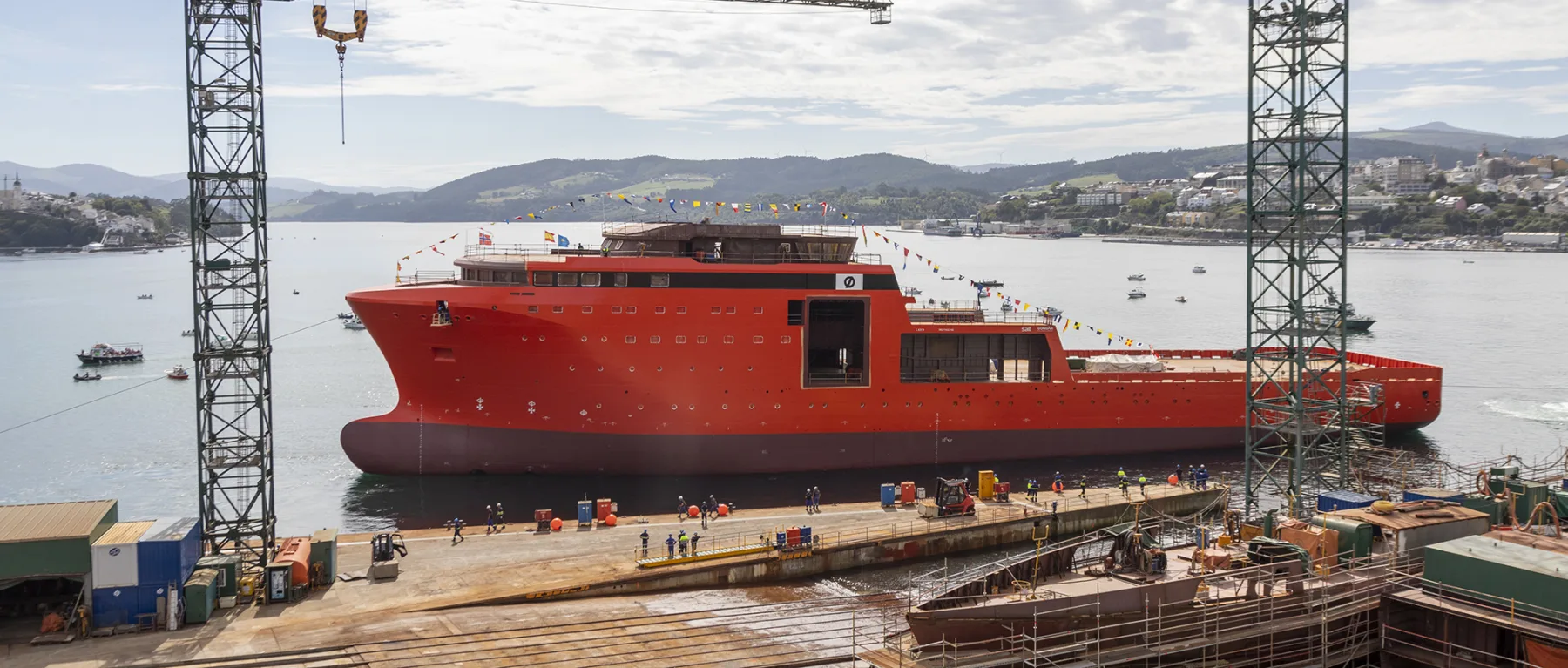
100-year-old Spanish shipyard GONDAN Shipbuilders constructs its biggest vessel yet.
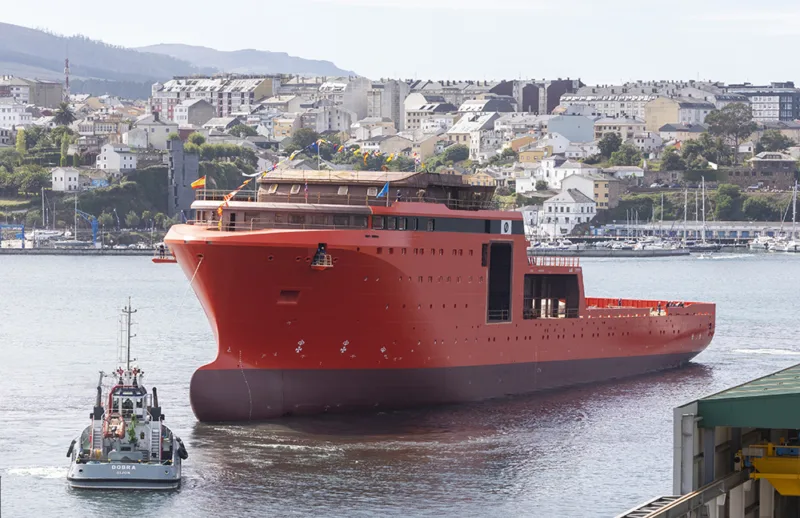
On 10 September 2026, GONDAN Shipbuilders launched the C513, a 120 by 23-meter ocean energy support vessel and the 21st of 23 vessels ordered by Østensjø Rederi, with units 22 and 23 already under construction for the same owner. It is the largest vessel the yard has delivered since it was founded in 1925, and one of the most complex. GONDAN credits one shared 3D model as a key aspect of its success story.
“The 3D is like a mirror of what’s coming. If it’s not in the 3D, it doesn’t go in the vessel.”
Technical Office Director
Javier Martín-Arroyo
Cadmatic use in a nutshell
Customer challenge
- Slow, distant support and a shared database that had been promised for years but never delivered
- Design work split across separate databases per office, with mismatches surfacing late
- A production floor that worked from drawings and questions, not from the model itself
Cadmatic solution
- One shared database connecting Gondan, Salt Ship Design and subcontractors across Spain, Poland and Norway
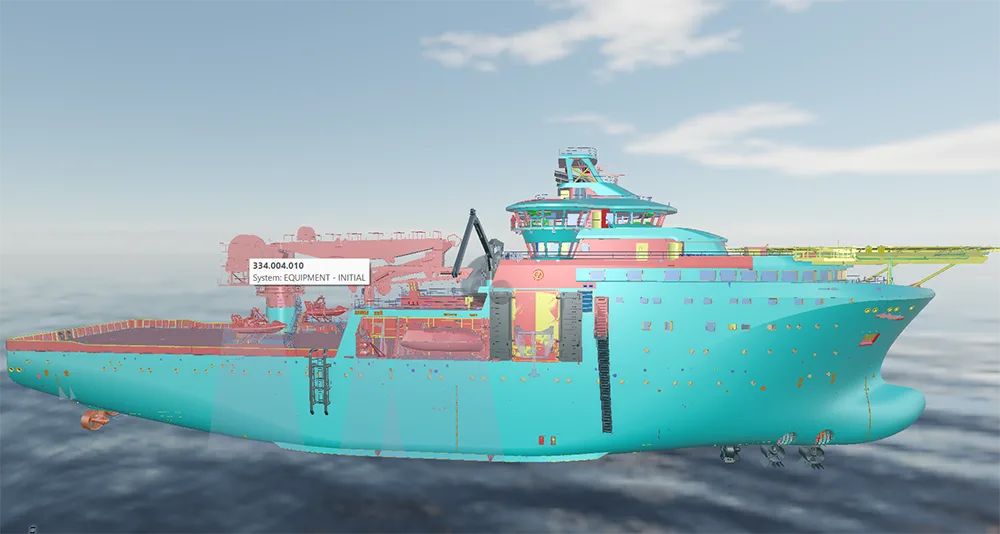
- A Cadmatic Outfitting 3D model detailed enough, 95 to 97 percent of the vessel, that production builds from it directly
- Cadmatic eBrowser on every workshop screen and aboard the vessel under construction, updated daily
The C513 has a single hull built to handle walk-to-work personnel transfers, offshore wind construction support, subsea installation, ROV inspection, and cable laying and repair, running on a diesel-electric system with battery power, shore power and readiness for future alternative fuels.
Each of those jobs brings its own systems into the same hull, and none of them can end up in the same place. At GONDAN, that gets settled in the model months before anyone cuts a plate.
Technical Office Director Javier Martín-Arroyo puts his own role simply: “I give a product to production, and that product is the Cadmatic 3D model. That’s my job.” That discipline traces back a decade to a slower, harder decision taken in 2017, when GONDAN replaced the naval design software it had used for more than twenty years.
No single event forced the change. Javier describes four pressures building over two to three years of evaluation. Support tickets to Madrid came back in weeks, sometimes months. A shared database across design offices had been promised, year after year, and never delivered. GONDAN had already paid for that gap in the form of separate databases per office, piping and data that did not match, and problems that were found too late to fix cheaply.
The old software itself had stalled, or, as Javier puts it, was simply “not what we expected.” And GONDAN’s own market was already voting with its feet: the Norwegian designers and owners it works with a lot, Salt Ship Design among them, had moved to Cadmatic already.
One database, three countries, one team
The clearest change that Cadmatic brought is the database itself. GONDAN once ran separate databases per design office, reconciled late enough that piping and structural mismatches turned up after the fact.
Now GONDAN and Salt Ship Design work from one up-to-date database, with subcontractors and partners logging in from Spain, Poland and Norway instead of relocating to the yard. At peak capacity in the past, that meant moving subcontractors to Figueras itself, finding them computers wherever there was space, and arranging and paying for housing. None of that travel is necessary now.
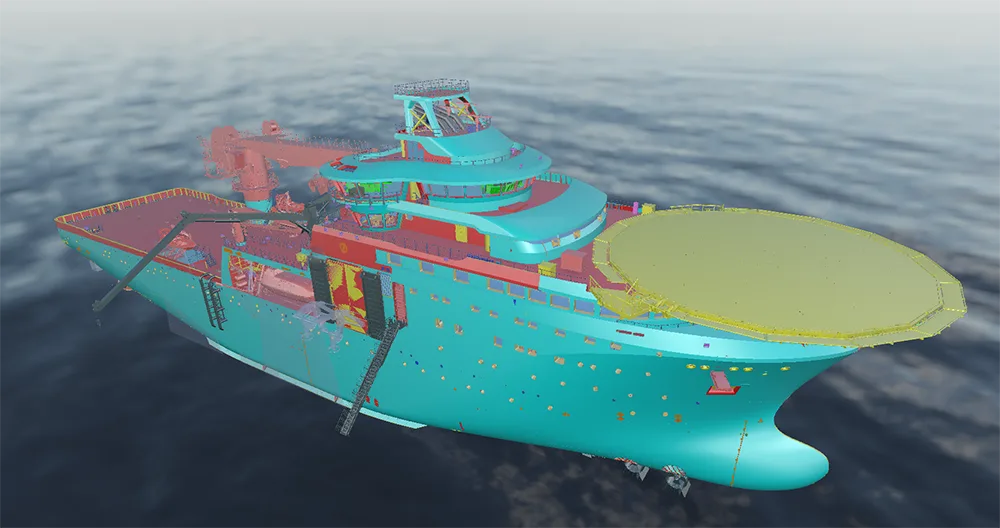
A 3D model production actually builds from
That model now goes deep, up to 95 – 97% percent of a vessel, all the way down to tank sensors, small panels, tank access handles and the ladders inside tanks. Production used to work from drawings and walk to the design office to ask why something was placed a certain way. In some cases, a fitter may even decide on the spot where a tank sensor should go once aboard.
Now that placement is decided in the Cadmatic Outfitting 3D model before anyone sets foot on the vessel, and Cadmatic eBrowser sits on a screen in every workshop, with computers and internet access aboard the ship itself while it is still under construction.
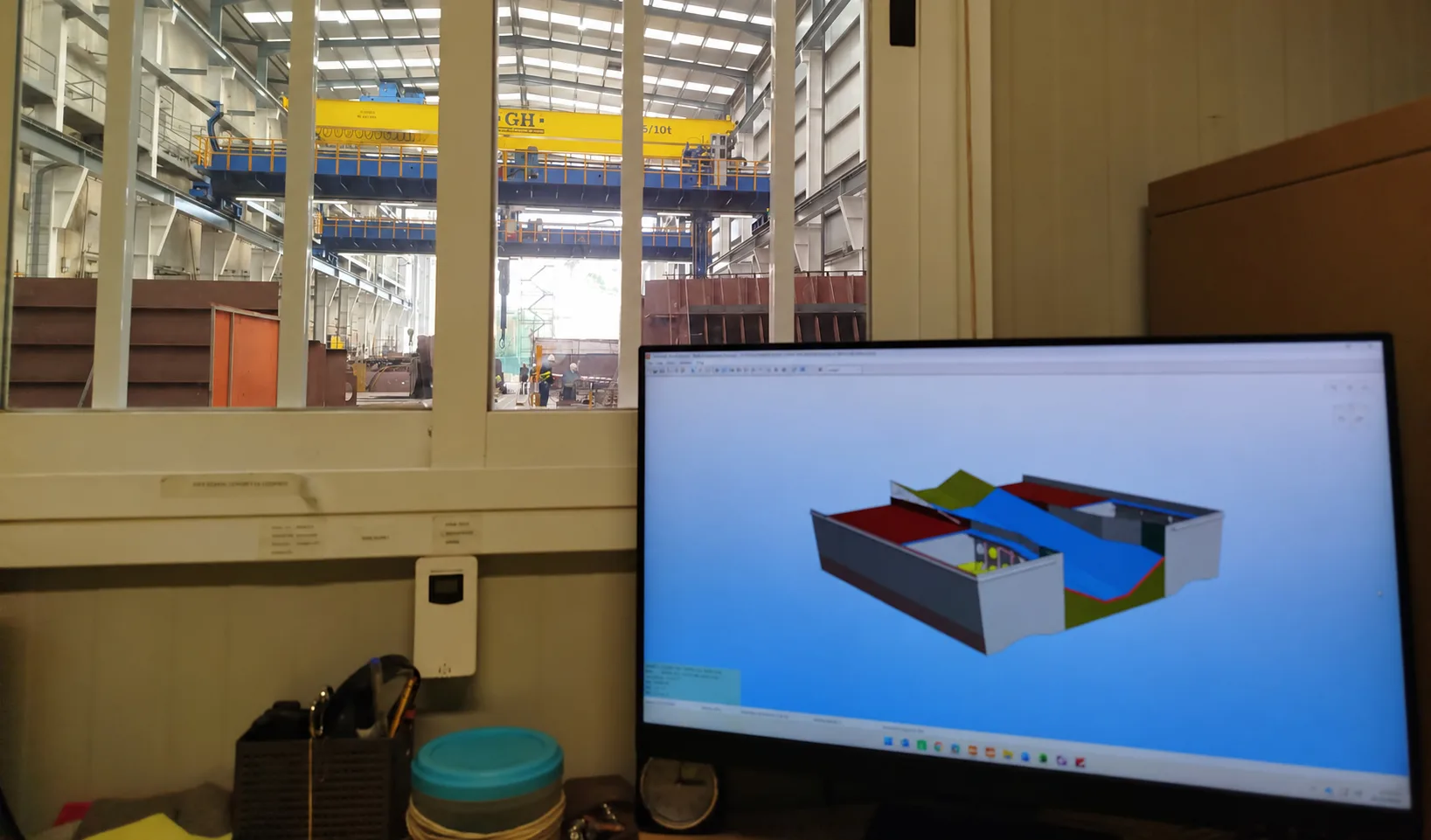
The owner’s view of the project has changed just as much. Where an owner once saw drawings and found problems only once they walked the ship at inspection, GONDAN now pushes a daily eBrowser update that lets the owner and the basic designer follow the model as it develops. This brings the owner inside the project team, proactively collaborating with designers. Issues are identified while they are still cheap to fix, fewer interferences and rework mean less interruptions in production.
Responsive support – no more weeks of waiting
Support used to mean a ticket to Madrid and a wait of weeks, sometimes months. GONDAN now gets a same day or next day response, and someone to call. That matters more than it might sound as GONDAN runs 13 to 14 Cadmatic licenses in daily use across the yard. Keeping that many people unblocked has given the design office enough confidence to mandate Cadmatic for every subcontracted design package, in addition to work done in house.
GONDAN was the first shipyard in Spain to make that switch, and for a while it was also the only one, which made the mandate a harder sell: a Spanish design office serving one Cadmatic customer had little reason to retool. A decade on, that’s changing rapidly. More Spanish shipyards have adopted Cadmatic or are moving toward it.
A hundred years, and the biggest ship yet
The outcomes Javier points to are less rework, fewer interferences discovered late, fewer modifications made once a vessel is already on the water, and design offices that stop being interrupted by production because production already has what it needs.
Especially production-readiness helps GONDAN win work and keeps the yard running day to day. Javier credits efficient ways of working as one of the reasons they won a recent tender for two research vessels for the German government. GONDAN simply showed the owner how deep the 3D model goes and how far production has come to rely on it as part of the pitch.
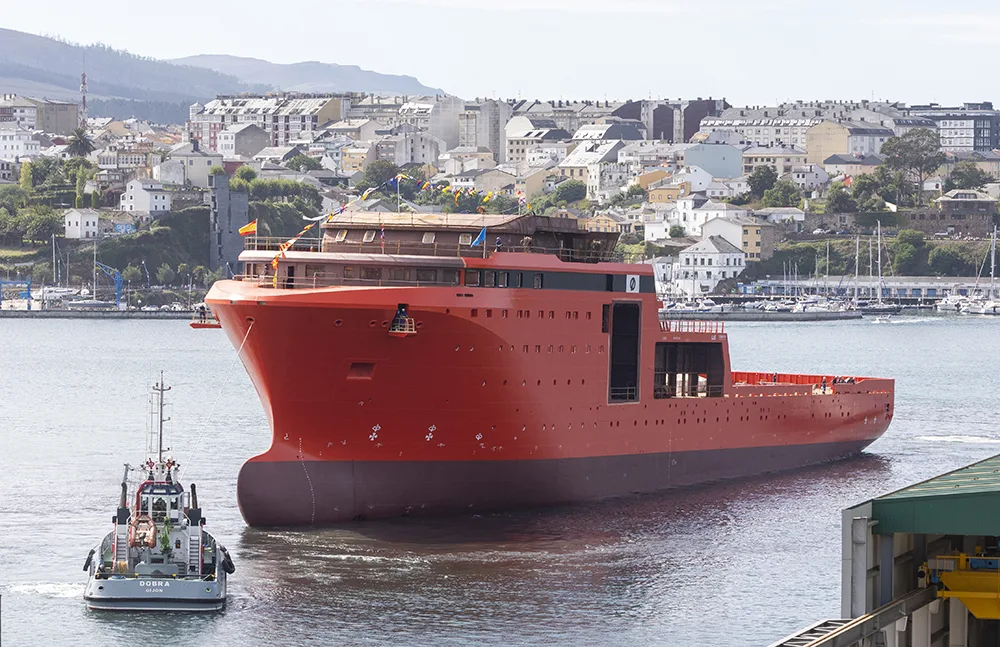
Owners who see how a vessel grows in the model, he says, understand how it will grow on the slipway, and that gives them confidence that problems get solved before they become expensive. “It’s not the key,” he says, “but it’s there, and it’s evaluated. It’s on the table, and it’s adding value.”
A vessel that size, on a model that detailed, delivered by a 100-year-old family yard, is the argument for keeping everything in 3D in the first place.