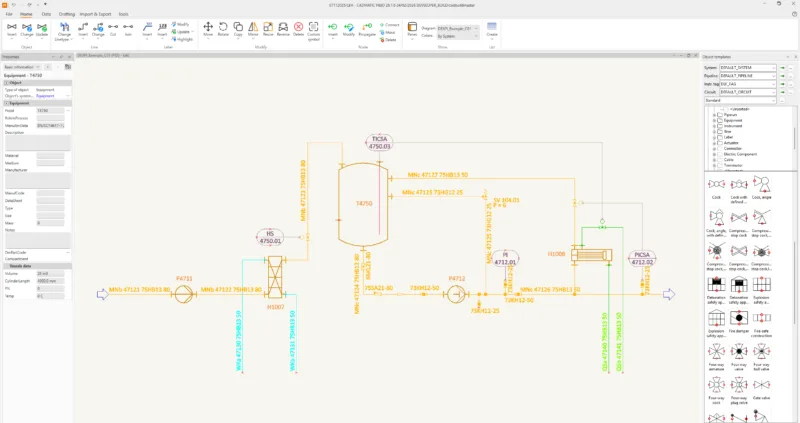
Start small, scale when ready: a practical P&ID path for plant owners and operators
P&IDs are the backbone of plant operations
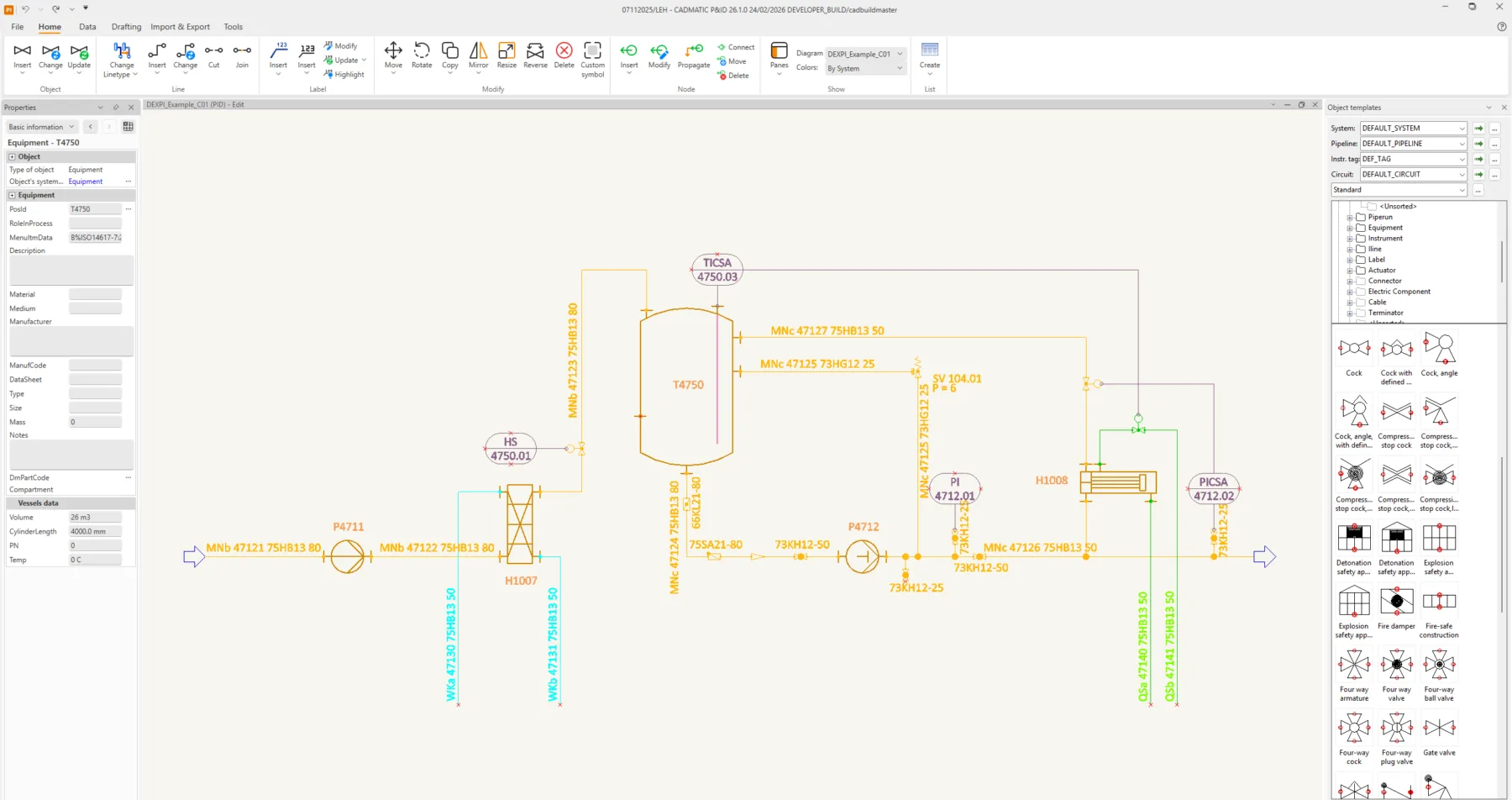
For many owner operators, piping and instrumentation diagrams (P&IDs) sit at the center of daily plant operations. Maintenance teams rely on them to locate equipment and plan repairs. Engineers use them to review safety, evaluate modifications, and prepare future projects. In many facilities, they remain one of the most important documents available and sometimes the only digital documentation that reflects how the plant actually runs.
Why keeping P&IDs up to date becomes difficult
Keeping these diagrams up to date is a constant challenge. Plants change over time, as process improvements are implemented to increase safety and capacity; new instrumentation is needed for monitoring, or pumps are replaced during a shutdown. Each of these changes must be reflected in the P&ID to keep it reliable.
The difficulty grows when legacy documentation enters the picture. Owner operators often manage a mix of drawings collected over decades: PDFs, DWGs, vendor diagrams, and manually edited files. When a new software system is introduced, expectations can quickly escalate. Everything must be converted. Standards must be aligned. Every diagram should be complete before the system delivers value.
This is where many projects slow down.
In practice, updates to piping and instrumentation diagrams rarely happen all at once. Most improvements occur during real plant changes. When a pump is replaced, a new instrument installed, or a process updated, engineers revisit the diagram, refine symbols, clarify connections, and bring the information closer to current plant reality. Over time, these revisions gradually improve the quality and usability of the diagrams.
Owner-operators do not need perfect data or as-built drawings converted in one go to start working with a new software system. With the right approach, P&IDs can be enriched step by step – delivering value early while keeping change manageable.
In practice, enrichment means gradually improving diagrams as they are updated: aligning symbols with standards, structuring tags consistently, clarifying line connections, and adding equipment information where needed.
P&IDs drive digital improvement
In projects, P&IDs are often treated as design deliverables. For owner-operators, they are one of the most important documents they need and in many cases it’s the only digital document they have. That makes P&IDs a natural starting point for digital improvement. They are trusted and can be updated easily, especially compared to heavy implementations of digital 3D models.
The challenge is keeping them usable and up to date without launching a large as-built conversion project.
The trap of perfection paralysis
Many owner-operators delay action because they believe digitization must happen to its fullest right away:
- All legacy diagrams converted
- All symbols harmonized
- All vendors delivering neutral formats
- All data fully structured from day one
In practice, this rarely matches reality.
Vendor power dynamics mean owner-operators often cannot demand DEXPI or XML deliveries yet. Large equipment suppliers often deliver P&IDs in DWG or PDF because legacy contracts allow it, even though these files have limited editing capabilities. As a result, teams redraw P&IDs manually. Not just copying them, but also improving quality, structure, and consistency along the way, as P&IDs remain in use throughout the entire plant lifecycle.
Waiting for a perfect starting point often means waiting indefinitely.
Start small, scale when ready
A more practical strategy is incremental adoption. Instead of asking “How do we convert everything?”, ask: “Where can we start and get value fast?” From real customer discussions, a few principles stand out.
You do not need hundreds of diagrams to begin: While some solutions assume large volumes, meaningful benefits can start with 30 plus P&IDs. That makes mid-size projects viable, both financially and operationally.
One plant is enough: There is no need to start with ten sites. One plant. One area. Even one main system diagram is a valid entry point.
Legacy data is not wasted effort: Importing or copying legacy P&IDs is not just redrawing work. It is an opportunity to align symbols, improve clarity, and make diagrams fit current operational needs, as you go.
A step-by-step path that keeps change manageable
Based on real workflows, the path forward does not need to be linear or mandatory. Think of it as optional steps, not a fixed sequence. Many owner-operators follow this approach when implementing CADMATIC P&ID together with eShare, using existing diagrams as the starting point for gradual improvement.
Step 1: Use what you already have
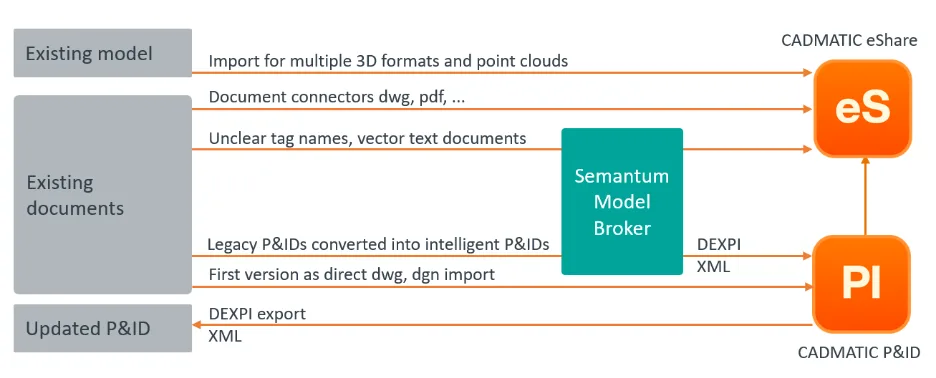
Start by collecting existing PDFs and DWGs and sharing them through CADMATIC eShare. You can also link P&ID documents with point clouds from laser scans or layout with smart points. This alone improves access and visibility without changing how diagrams are created.
Step 2: Convert selectively
When PDFs are no longer enough, import DWG or DGN into CADMATIC P&ID one by one. Focus on diagrams that change most often or support critical operations. Export them to eShare as they are.
Step 3: Improve quality over time
As changes occur, refine symbols, structure, and data gradually. Each revision improves quality without creating a separate “conversion project” to reflect the as-built status. When diagrams start moving between systems or projects, neutral formats become useful.
Step 4: Use DEXPI where it fits
For multi-vendor collaboration, DEXPI provides a neutral way to exchange P&ID data when volumes justify it. Compared to step 3, this approach can take more time at the start because diagrams need to be prepared and mapped for the exchange format. The benefit is that P&IDs become structured and intelligent from day one, which can make it a valuable option even when working with legacy material. Over time, import and export become practical tools to enrich and improve diagrams as projects evolve.
This approach mirrors broader digital transformation research, which shows phased adoption reduces risk and increases long-term success compared to big-bang transitions.
Change management advice for owner-operators
Technology alone does not drive adoption. Change management does. In successful projects, a few practical principles make the difference.
Set expectations early: Communicate clearly that improvement happens over time. The goal is progress, not instant perfection.
Involve operations from the start: P&ID diagrams live with operations and maintenance teams. Their feedback helps ensure diagrams reflect how the plant actually runs and builds trust in the documentation.
Appoint P&ID ownership: Someone must be responsible for keeping diagrams current. Clear ownership prevents documentation from drifting back into static drawings that no longer match the plant.
Measure the right outcomes: Success is not the number of diagrams converted. What matters is whether teams can rely on the information when they need it.
Where the real value appears: When organizations establish a consistent process for updating P&IDs as changes occur, the benefits appear in everyday work. Maintenance becomes easier to plan. Safety reviews become more reliable. Shutdown preparation improves, and future modifications start with clearer documentation. Over time, diagrams become a trusted reflection of the plant instead of a snapshot from the past.
Why incremental P&ID modernization works
Incremental P&ID modernization reduces risk while delivering visible results.
- Faster access to reliable information
- Less rework when changes occur
- Better alignment between engineering and operations
- A solid foundation for future digital initiatives
Most importantly, it restores confidence. Teams move forward without waiting for ideal conditions.
Confidence over perfection
Owner-operators already have the most important ingredient: P&IDs that people trust. With CADMATIC P&ID and DEXPI, they can build on that trust step by step. Start small, improve when it makes sense, and scale when you are ready. Digital progress does not have to be disruptive to be meaningful.
See how to take the next step: Read how NIER delivers complex projects faster, saving 1,000 design hours through efficient project setup with CADMATIC P&ID and 3D Plant Design.