From paper to tablet: eShare and eGo transform shipbuilding at MEYER WERFT
Cadmatic use in a nutshell
Customer challenge
- Production teams couldn’t easily access the 3D model while working on-site.
- Printed drawings and 3D-XML viewer lacked crucial detail, especially in complex areas.
- Foremen and workers often had to interrupt their work to go ask questions or find additional information.
- Models were too large to navigate without filtering or dividing them into submodels.
- Status management was disconnected from the actual work happening on board.
Cadmatic solution
- CADMATIC eShare is used in the office to view the full ship model, check statuses, and manage work packages.
- CADMATIC eGo (add-on to eShare, a tablet app) brings the same power to the tablet, which is lightweight, offline-friendly, and easy to use on board.
- Teams can isolate relevant sections using submodels and each ship includes over 1,000 of them.
- No CAD license or constant internet connection required.
- Training is quick: just 30–60 minutes is enough to get started.
“When you’re deep in the hull, there’s no network. eGo/eShare works offline, and the navigation is simple. Most people get it right away after one session.”
Janic Wiechmann
Solution Owner, 3D Information Management – Production IT Solutions
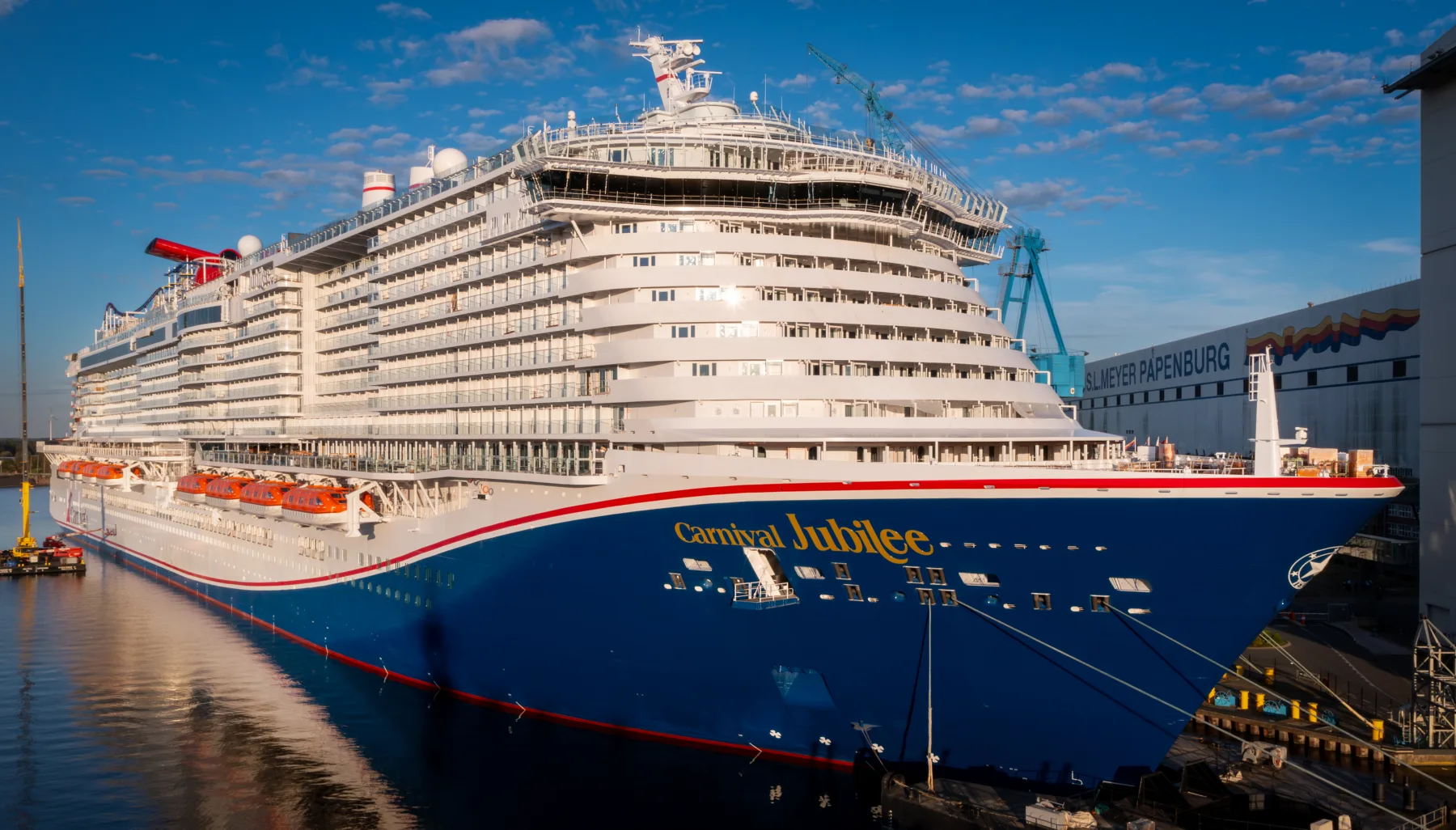
Cadmatic’s design and information management solutions have been used at MEYER WERFT’s Papenburg yard since 2018. As part of the long term strategy, MEYER WERFT has expanded the setup more recently with CADMATIC eShare and CADMATIC eGo to support production teams with easier access to 3D model information on the shop floor.
Building cruise ships involves high complexity, with many teams working in parallel across the entire ship. To keep everything moving, teams on and off the shop floor need access to detailed, up-to-date design information – preferably right where the work happens.
Traditionally, this meant switching between printed drawings, limited 3D viewers, and office-based checks to verify design details. As ships and schedules grew more demanding, MEYER WERFT looked for ways to bring clearer, more practical 3D information closer to the work.
MEYER WERFT decided it was time for a better approach to the one that brings digital design data directly into the hands of the people building the ships.
“Drawings are often too overcrowded. You don’t see overlapped objects or adjacent assemblies. With eGo, you can hide what you don’t need and focus,” says Janic Wiechmann, Solution Owner, 3D Information Management.
Building on the long-term strategic partnership and years of Cadmatic use, MEYER WERFT introduced CADMATIC eShare and eGo to give production teams a clearer, more efficient way to work with the 3D model, right on the shop floor.
A structured rollout – not just tablets on desks
At MEYER WERFT, the transition to digital didn’t mean simply handing out tablets. The yard implemented a systematic, thoughtfully designed approach to make sure the tools work reliably for those on the shop floor.
Production teams pick up fully charged tablets from dedicated cabinets at the start of their shifts, ensuring constant device availability. Software updates are pushed during scheduled breaks, minimizing disruption to ongoing work and keeping all users aligned with the latest features and content.
This setup reflects a broader commitment to digital efficiency; one where hardware, software, and process come together to support daily operations.
“We focus on making sure the tools help people work better. That requires structure,” adds André Schreiber, Project Engineer, Industrial Management.
Real results on the shop floor
Since rolling out eGo and eShare, MEYER WERFT’s production teams work more independently and efficiently. The feedback from users, especially foremen, has been highly favorable.
- Less legwork: Foremen and workers no longer need to walk back to offices for answers.
- Clearer coordination: Teams can visually inspect how pipes or components fit, even hiding parts to see underneath.
- Smarter workflows: Status updates can be managed directly where the work happens.
- Faster onboarding: Minimal training is needed, and usability is high even for non-digital natives.
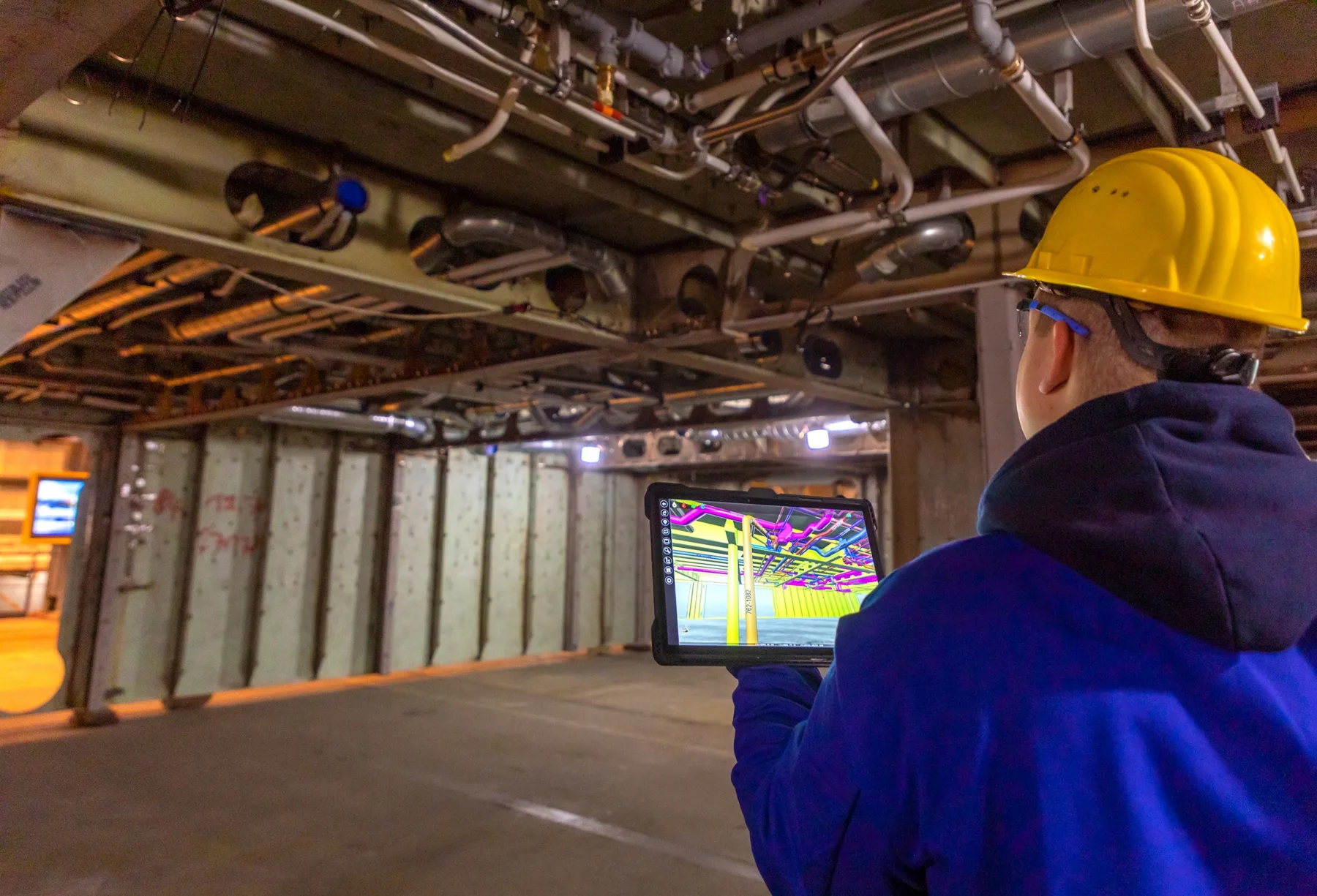
André gives us a glimpse of the future: “We’re even piloting sections where no printed drawings are used at all, just eGo. That’s the direction we’re heading.”
Transitioning to a paperless shipyard
MEYER WERFT is building a fully paperless shipyard. The next steps include tighter integration with ERP and MES systems, enabling status changes directly from the shop floor and creating more efficient data flows across systems.
The yard is also actively exploring ways to improve performance and scalability, including the possibility of a cloud-based infrastructure in the future.
“We’re currently testing multi-user tablets, kiosk modes, and even AR. But more than fancy features, it’s about helping the people on the floor work better. That’s where digital tools really matter,” sums up André.