Owner-operators who own their data run better projects – and are ready for AI

This article draws on interviews recorded at the Cadmatic Digital Wave Forum 2026. Watch the full sessions here.
The phone call nobody wants comes at the 90% review. Drawings are delivered and the comments come back. And somewhere in the gap between what was designed and what was expected, rework begins. It’s a symptom of a design process where owner-operator data ownership hasn’t been part of the plan from day one. This is expensive and, in most cases, entirely avoidable.
For decades, this has been the rhythm of large industrial projects. The EPC contractor designs a facility, which the owner-operator reviews at 30%, 60%, 90%, and final. Four moments of visibility across a project that may span years and involve hundreds of millions of euros. The rest of the time, the data lives inside someone else’s systems.
That arrangement made sense when there was no practical alternative. But that is no longer the case.
This article looks at what changes when that arrangement is turned around, i.e. when the owner-operator owns the data, the environment, and the standards from day one. How it affects the way projects are run, how contractors work, how problems get caught, and how the digital twin that emerges from the project stays useful long after handover.
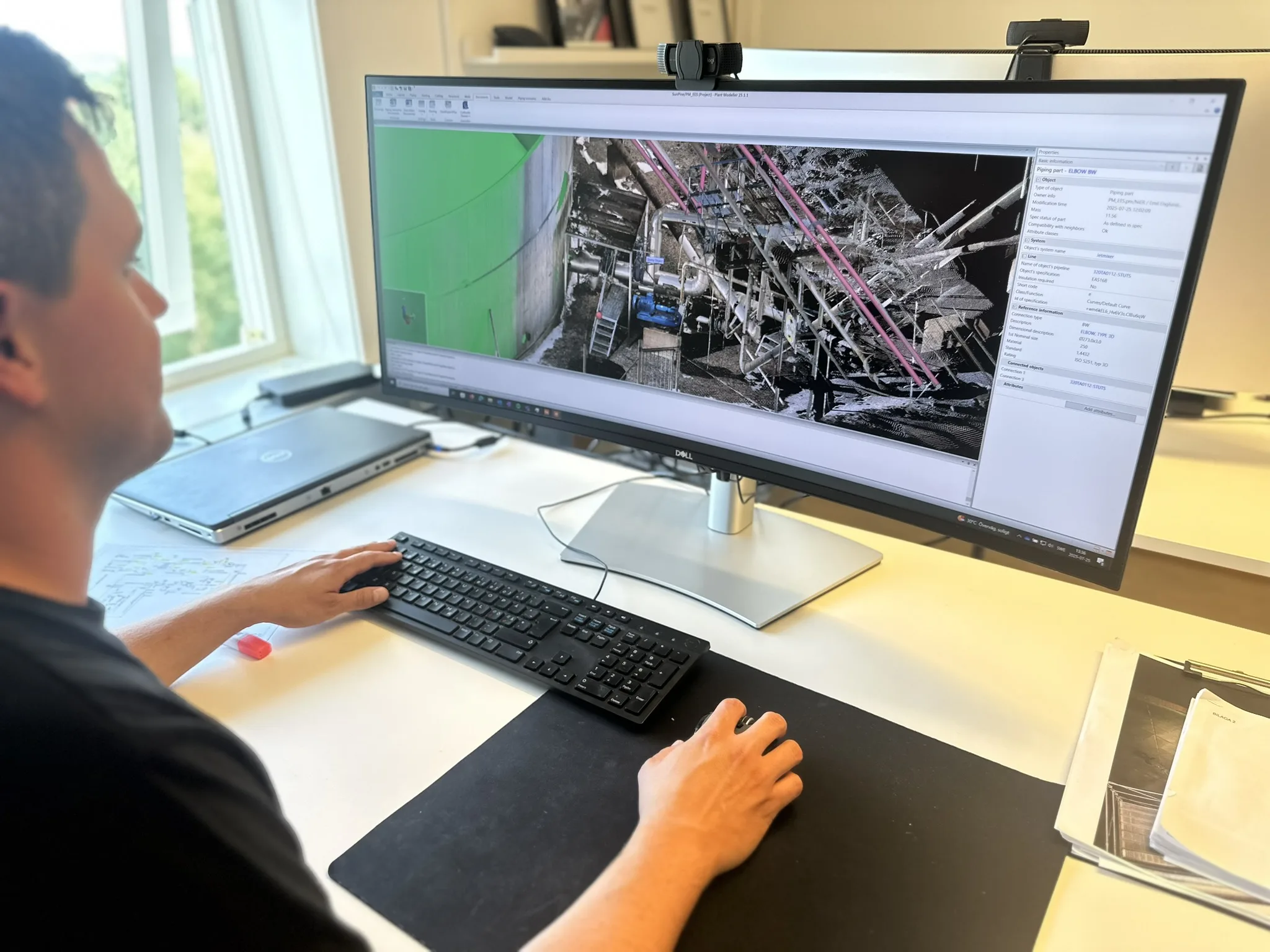
The 3D model has become the source of truth
Niklas Eriksson from NIER in Sweden, who leads digitalization projects for some of the largest industrial operators in Scandinavia, has watched this transition happen in real time. The plants his team works with range from one square kilometer to five. The projects they support run between 500 million and one billion euros.
“We have seen a clear shift towards the 3D model being the master source of data,” he says. “2D drawings are a snapshot of a model designed for a specific purpose. They have been the best compromise for a very long time. Today we are moving into a world where the 3D model holds the data and is the source of truth.”
That shift is both technical and cultural. Data that once lived in physical archives, then in document management systems, now lives in a model. And the question of who owns that model, and who can access it at what time, has become one of the most consequential decisions an owner-operator makes at the start of a project.
Waiting for data is a choice
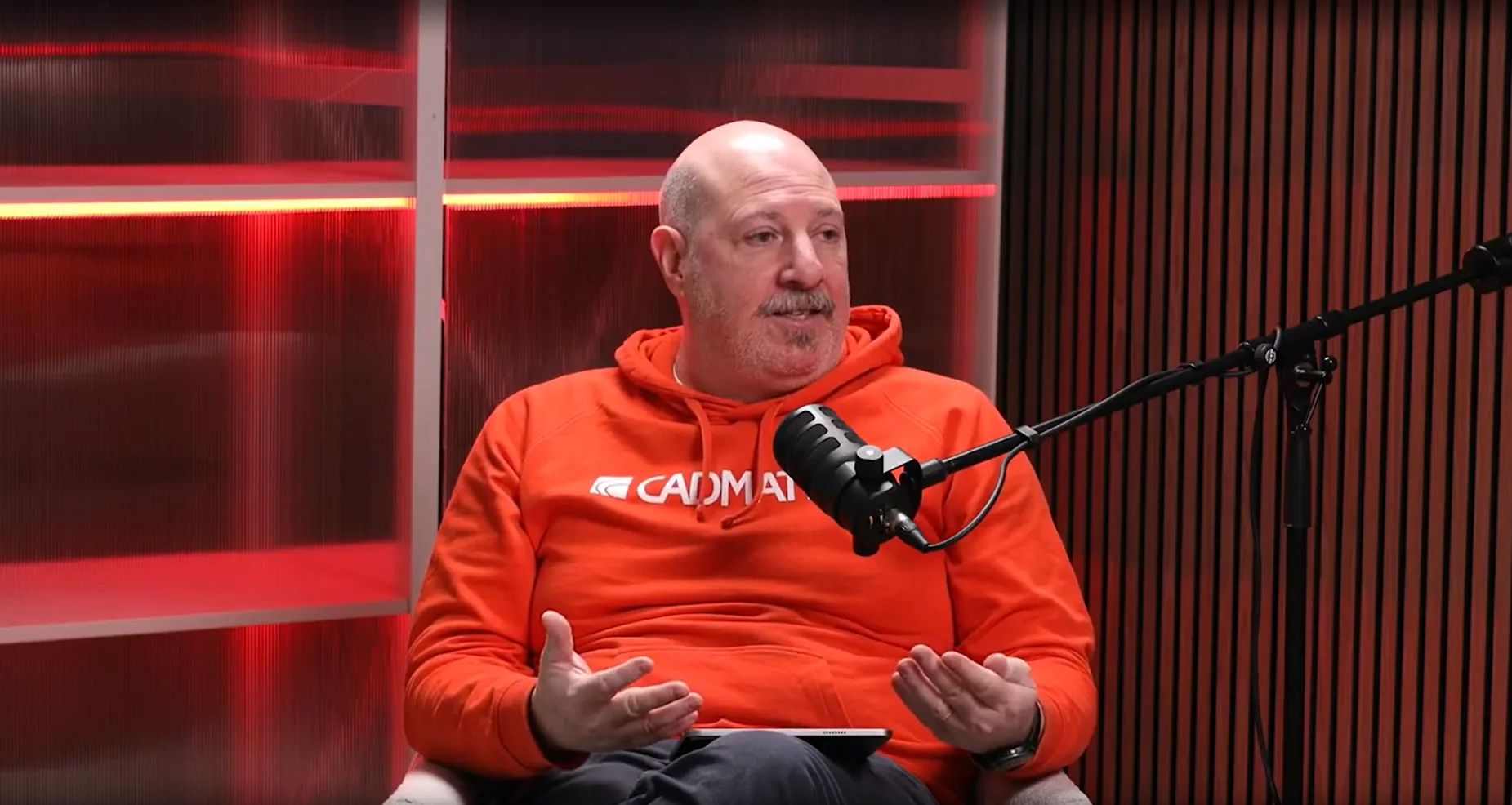
Gian Mario Tagliaretti from Cadmatic has spent 35 years across owner-operators, EPC contractors, and software development. He frames the current industry practice plainly: “A typical project is done for the owner-operator by the EPC contractor. The owner-operator is allowed, according to their contract, to review what the EPC contractor has designed at 30%, 60%, 90%, and final review.”
He asks a rather straightforward question: “Can we do better than four reviews over the course of a project?”
The answer, with Cadmatic’s approach to data ownership, is yes. The model lives with the owner-operator from day one. Cadmatic 3D Plant Design and Cadmatic P&ID are installed on EPC contractor machines and work as they always have. But the data they generate syncs continuously to the owner-operator’s master environment, whether that sits on-premises or in the cloud. Nothing has to be handed over as the owner-operator has the data already.
Tagliaretti describes this as a move to continuous integration, a principle borrowed from software development. “The owner-operator has control from day zero of everything that happens during the design phases,” he says. “You don’t have to wait three or four months for every step to be completed.”
What the replica model enables
At the center of this approach is Cadmatic’s work sharing technology. The master project environment sits with the owner-operator. The EPC contractor receives a replica containing exactly what they need for their scope of work, nothing more. Changes sync in both directions, sending only the latest updates. Eriksson’s team typically sets the sync interval to ten minutes, though it can go lower.
“If we have an outage somewhere, it will just update whenever it gets a connection again,” he says. “It just works.”
The replica model also means the owner-operator can work with multiple EPC contractors at once, giving each access only to their relevant part of the project. Data transfers encrypted, while role-based access permissions govern what each party can see.
More significantly, the owner-operator sets the terms from the start. Standards, piping specifications, and component libraries are set up in the master by the owner-operator and flow automatically to every replica. Every contractor works from the same foundation. There is no version drift, no reconciliation at handover, and no negotiation about whose standards apply. The owner-operator’s standards are the project standards from day one.
As Tagliaretti puts it: “The owner-operator can set up the project using their standards. Those standards are used by the EPC contractor who does not even have to put effort into designing them, because those are given.”
This leads to faster execution, more consistent quality, and a design environment the owner-operator controls.
The digital twin is not a separate phase
One of the most persistent misconceptions in industrial digitalization is that a digital twin is something you build after a project.
In fact, when data ownership sits with the owner-operator from the start, the digital twin evolves with the project.
“There is no separate creation phase,” says Eriksson. “The digital twin is born when somebody enters data into the model. It evolves over the project and is handed over when the project is done.”
This matters because Cadmatic eShare, the environment owner-operators use to view, navigate, and collaborate around the 3D model, is active throughout the project. Project teams can log markups in specific areas and review them in coordination meetings. Status changes on objects are updated in the field. When something is mounted, someone marks it in eShare, and the visual changes immediately for anyone looking at that part of the plant.
By the time the project closes, the digital twin already reflects the plant as built. Ready to be used for operations such as maintenance teams checking the plant status visually and integrated with systems like CMMS, ERP, and SCADA to support the full operational lifecycle.
What changes for the people doing the work
A shift in data ownership sounds like an IT decision. It is also an engineering decision, a project management decision, and an organizational decision.
Eriksson’s team positions the setup work as the most important phase of the project.
“The most important engineering work happens before the first engineer actually starts modeling,” he says. “The development and configuration of the component library, the setup, everything you need to have a good flow when designing.”
His principle is that data should be entered once. The value that a process designer enters into the P&ID should not be re-entered by the next engineer in a different field somewhere downstream. That principle has to be designed into the project from the beginning.
“Defining as much as possible at the start removes friction that many people would otherwise have to think about later, ” he says.
Tagliaretti echoes this from the collaboration side. When all design data flows into a central model that every department can access through eShare, the fragmentation and rework that normally exists between piping, electrical, and structural teams starts to break down. Interferences are spotted early. Comments can be made, seen, and acted on without waiting for the next formal review.
“As soon as the EPC contractor fixes an issue, you will see it immediately,” he says. “You do not need to wait for the 60% or 90% model anymore.”
Catching problems early keeps projects on time, on budget and minimized rework.
The infrastructure cost question
Owner-operators sometimes assume that this level of data integration requires significant infrastructure investment. The actual architecture is lighter than most expect.
Cadmatic’s approach keeps processing on client machines, where hardware is effective and costs are manageable. The sync layer between replicas and master is the only one that runs across the network, and it transfers only changes, not full model states. There are no expensive cloud rendering servers, nor GPU infrastructure in the cloud.
eShare runs on-premises and is accessible through a browser. This eliminates the need for VPN or special client software for the people who need to view and comment on the model.
“Just go to a website,” says Eriksson.
What owner-operators should do differently at project start
Both Eriksson and Tagliaretti make the same argument in different ways: the decisions made before design begins determine how smoothly everything that follows will go.
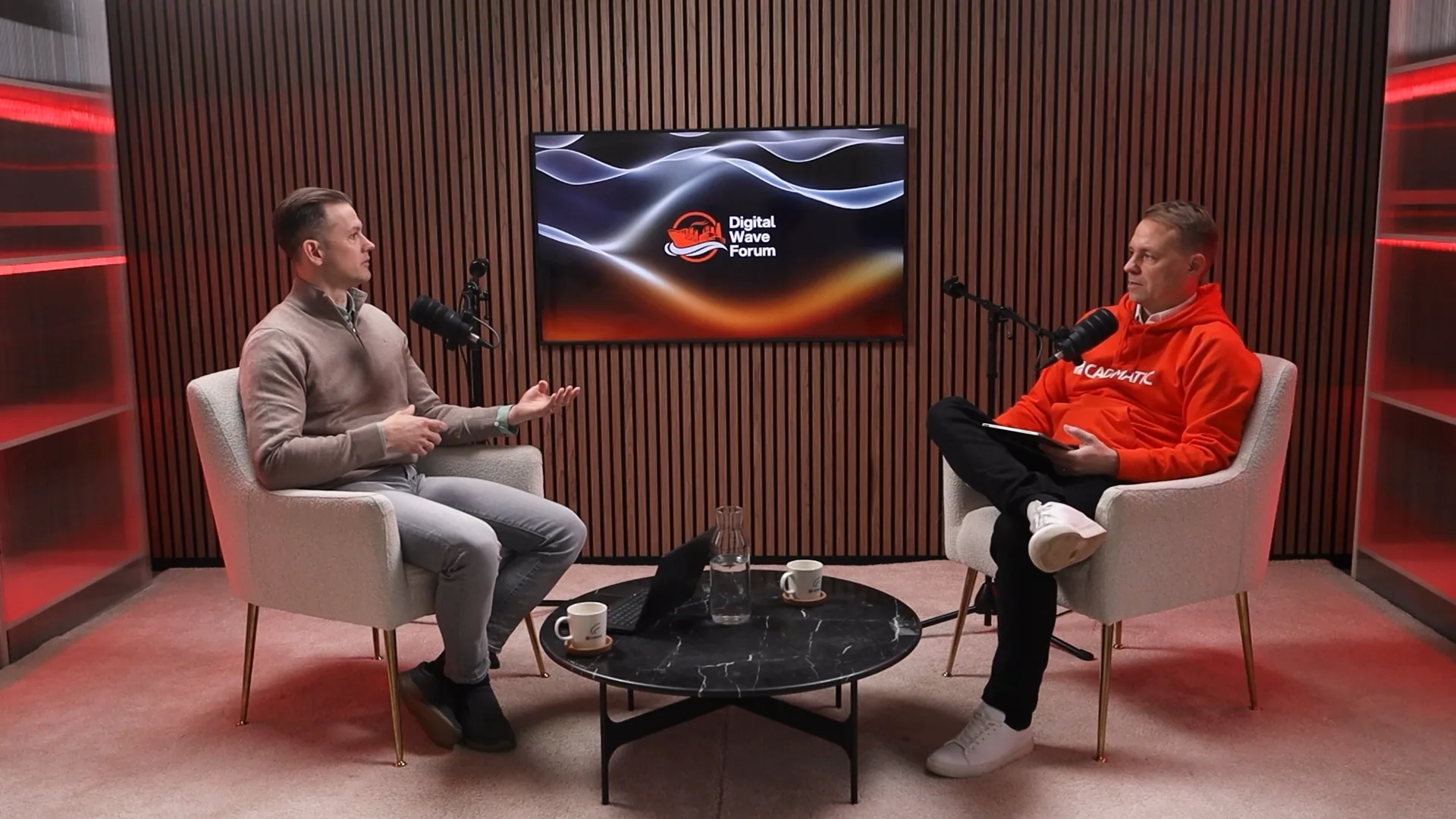
Eriksson’s advice is to find skilled people from every relevant discipline early and set a project standard. “Define how this project is going to work. If you find the right people, they have experience from other projects and can tell you – do it like this.”
He is direct about why this is important. “Even the best system solution is not better than the data we put into it.”
Tagliaretti’s version focuses on control. Owner-operators who own their data from day zero are not waiting for information to arrive. They have it. They can see problems forming. They can act on them. And when AI-driven analysis becomes part of the workflow, the data it needs is already there, owned, organized, and governed.
“Owning data from day zero,” he says, “is feeling in control, and empowered.”
Data ownership as the foundation for AI
Tagliaretti’s point about AI extends further than it may first appear.
For owner-operators, data owned and structured from day zero unlocks AI initiatives that would otherwise never get started. Predictive maintenance, production optimization, and process analysis need clean, current, connected data. When that data has to be harvested from documents, reconciled across multiple systems, and manually updated after every revamp, AI projects rarely get off the ground. When the data lives in a single owned environment, integrated with systems like CMMS, ERP, and SCADA, they can.
Cadmatic is developing and rolling out AI agent capabilities that build on this directly. These automate updates, keep the digital twin alive and accurate, and enable AI to work continuously across the full plant lifecycle.
The twin does not just get handed over in good shape. It stays that way.
The long-term value of data ownership
When the 3D model is the source of truth and it sits in your environment from the first day of the project, the dynamic of industrial plant design changes. Data is useable to get AI initiatives off the ground. Design reviews become conversations. Problems surface when they are still cheap to fix. The digital twin grows alongside the design. And when the project closes, the plant you built and the model that represents it are the same thing. Ready to support your plant operations across the whole lifecycle.
That is the practical value of data ownership.