Weld management in shipbuilding – hundreds of welds, one version of the truth
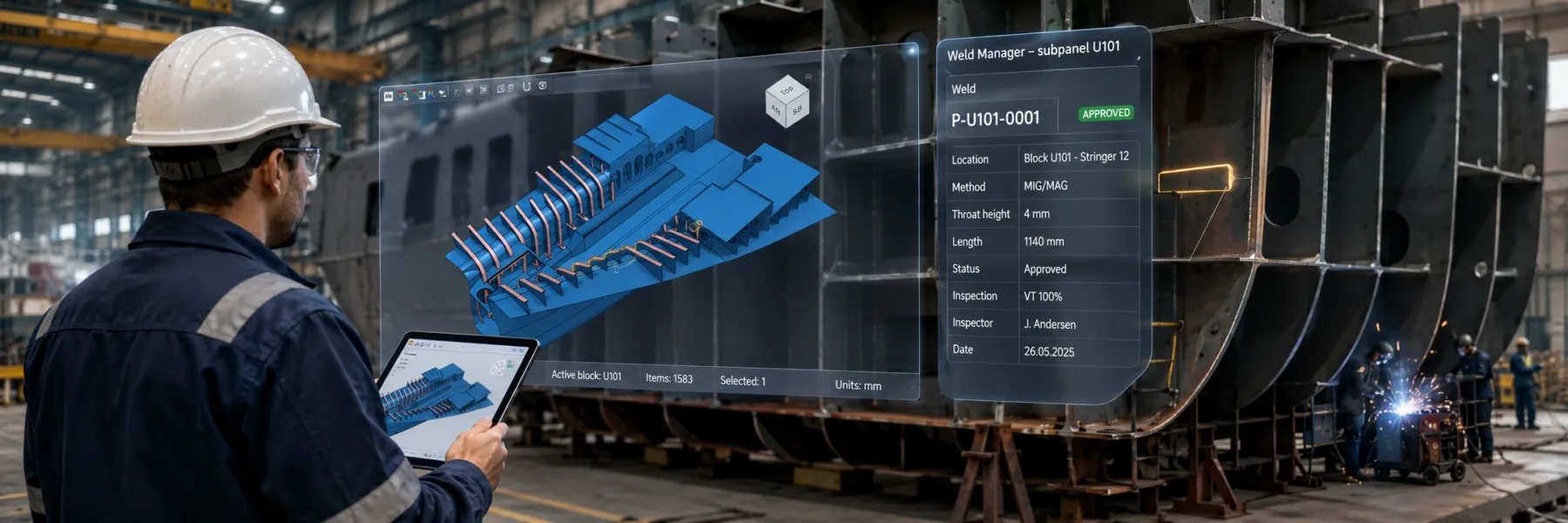
Shipbuilding projects can contain tens of thousands of structural welds. Each one needs a unique identifier, a set of attributes, a place in an inspection plan, and a record that survives the build and follows the asset into service. For the engineers and QA teams responsible for that data, the question has never been whether to track it. The question is how.
For most yards, the answer has been a combination of 2D drawings and a separate in-house weld database. It works until it doesn’t. And when class societies demand full traceability and a missed inspection record can halt production, “until it doesn’t” tends to arrive at the worst possible moment.
When 2D drawings meet complex structures
The structural complexity of a modern vessel makes weld location genuinely difficult to communicate in two dimensions. A plan view shows the deck. It shows where outfitting items sit. What it cannot easily show is which weld is which, or give a fabricator or inspector the spatial context they need to find a specific joint inside a densely built block. For offshore structures, the problem is compounded further by the sheer density of hull-to-outfitting connections in each block.
The data problems that follow are predictable regardless of vessel type. Weld identifiers get created manually, based on drawing interpretation. Attributes get entered by hand into a database that has no direct connection to the design model. When the design changes, which it always does, the drawings, the database, and the physical build can drift out of step with each other. Catching that drift before it becomes a rework event takes time that most projects don’t have to spare.
Research from the National Shipbuilding Research Program put numbers to the administrative side of this: weld inspection alone generates several hundred pages of documentation per project, and most of it is still processed by hand before being transferred into spreadsheets. Inspectors estimated 15 minutes saved per individual inspection when digital records replaced paper, with the bigger gains coming from eliminating post-inspection data entry altogether.
The cost of getting it wrong is steep. Weld defects found during pre-commissioning inspection can run to €3,000–€12,000 per joint to cut out and re-weld, once mobilization, NDT, and schedule delay are factored in. For offshore spools that figure multiplies by three to five.
The classification requirement doesn’t bend
IACS Unified Requirements cover welding traceability in detail, and the major class societies, DNV, Lloyd’s Register, Bureau Veritas, and ABS, apply those requirements across vessel types with rigor. Welding procedure specifications, qualified welder records, inspection results, NDT outcomes: all of it needs to be documented, available for surveyor review, and traceable back to the specific joint in the structure.
That last part, tracing a record back to a specific joint, is where 2D-based weld management tends to struggle. A weld number in a database and a symbol on a drawing are only as reliable as the person who connected them. When a surveyor asks to see the inspection record for a particular weld in block U101, the answer should take seconds. In practice, it often takes much longer.
Class societies are also moving toward 3D model-based approvals, where review is conducted directly against the digital model rather than requiring conversion to 2D drawings first. Bureau Veritas and Mitsubishi Shipbuilding completed a joint development project on exactly this, finding that the approach lightened shipyard workload and improved accuracy across design revisions. DNV’s own specialists have described 3D models as opening up “new possibilities in asset data management” that will drive safety and reliability in ship design and operation.
What changes when weld management software lives in the 3D model
Cadmatic Hull allows welds to be created and managed directly inside the 3D design environment. Each weld gets a generated unique identifier built from the penetration type, the block name, and a sequential number, so a joint that reads P-U101-0001 is immediately locatable in the model, in the drawing, and in the export.
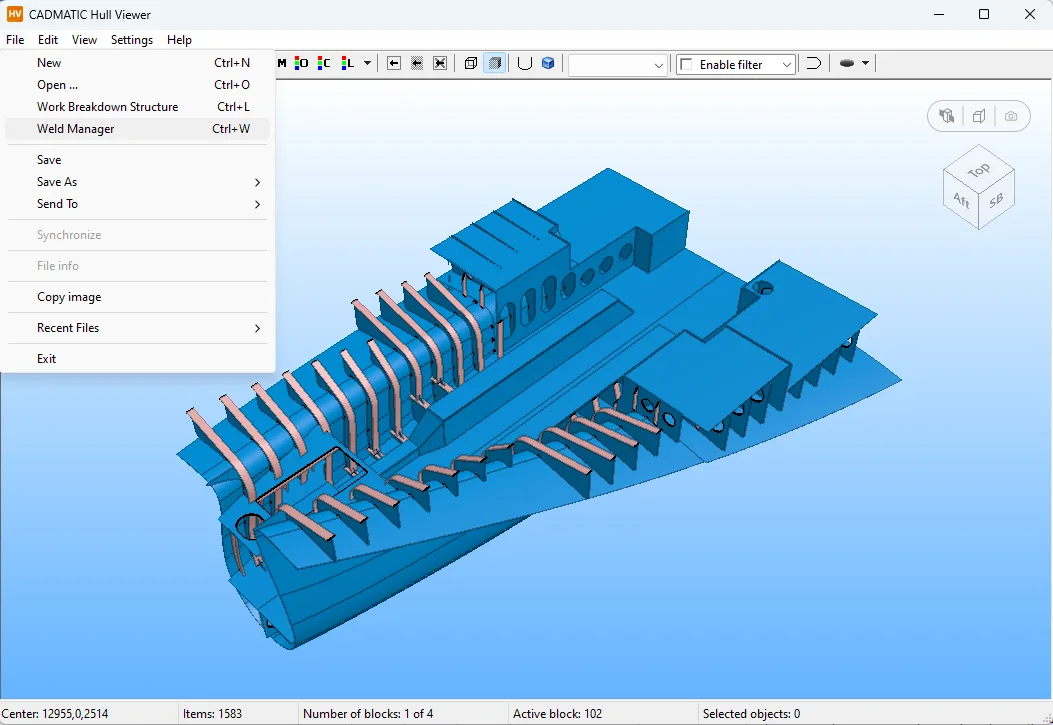
The attributes that class societies and weld databases require, length, material grade, thickness of each part, inspection category, weld configuration, revision status, are computed or assigned in context. Length and material thickness come directly from the 3D geometry, which removes a manual calculation step and the errors that go with it. When the design changes, the model reflects it. The weld data stays in sync with the structure it describes.
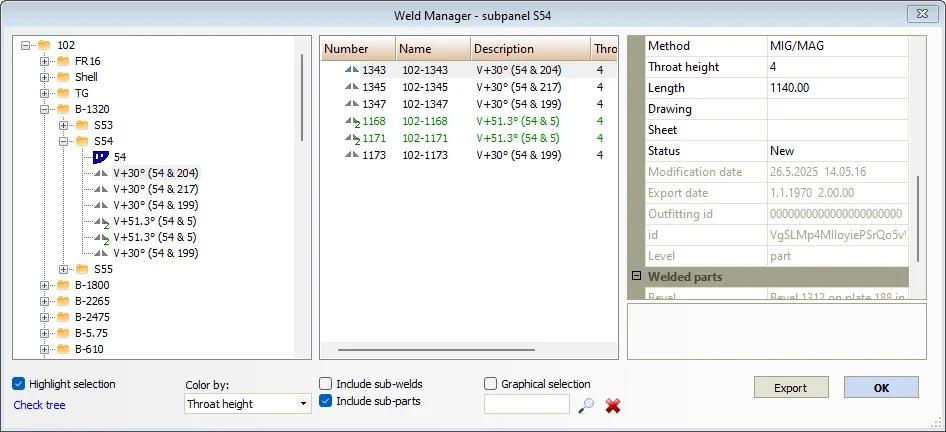
Weld drawings are generated automatically, with labels placed in the relevant plan view of each block. An inspector arriving at a work area can locate a weld by its number in the drawing, find it in the 3D model with spatial context intact, and access its full attribute record without digging through a separate database. The export to Excel, for import into whatever in-house weld management system the yard uses, carries all the attributes in the format the database expects.
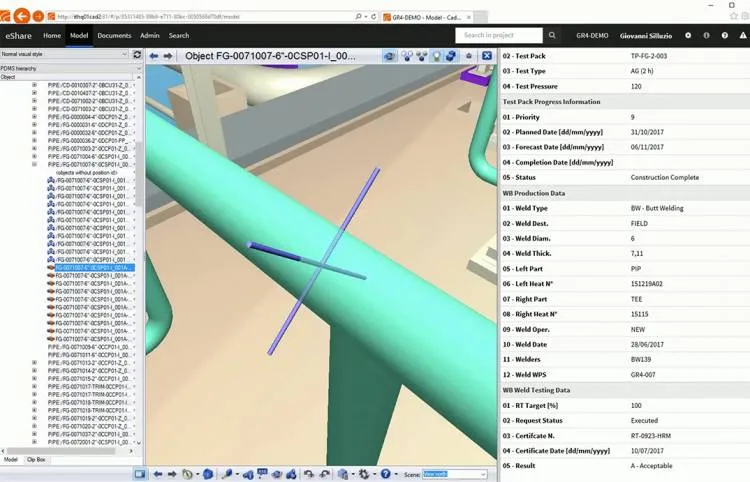
For anyone working in QC or inspection, Cadmatic eShare makes the 3D model and its weld data accessible without requiring CAD skills or a specialist workstation. A surveyor, a welder, a QC inspector: each can find a weld, check its status, and see exactly where it sits in the structure, on whatever device they have to hand.
The data outlives the build
Ships and offshore structures are long-lived assets. A vessel delivered today may be in service for 25 years or more, through multiple class surveys, repairs, and possibly changes of ownership. The weld data created during construction is not just a build record. It is the foundation for every structural integrity assessment that follows.
Yards that manage weld data in disconnected systems, drawings in one place, a database somewhere else, paper inspection records in a third, often find that handover to the owner is the moment everything comes unstuck. Pulling together a coherent set of welding records from multiple sources, in a format the owner’s maintenance team can actually use, is a project in its own right.
When the weld data lives in the 3D model and is published via eShare, it travels with the vessel. The owner receives a live 3D record of every weld in the structure: where it is, what it is, who inspected it, and what they found. That record becomes the baseline for in-service inspection planning, for assessing structural repairs, and for demonstrating compliance to class across the asset’s working life.
Closing the gap between design and construction
The gap between design data and construction execution has always been one of shipbuilding’s harder problems. Designs are produced in one system. Construction is managed in another. Welding inspection records end up in a third. Keeping all three in agreement, as the design develops and the build progresses, takes effort that grows with project complexity.
Weld management software built on top of the 3D design model reduces that gap substantially. Identifiers and attributes are generated from geometry, not typed from drawings. Drawings and data exports are produced from the same source. Changes propagate rather than being manually applied across disconnected systems.
For any yard where class requirements are strict and the cost of traceability failures is high, whether building offshore structures, merchant vessels, or naval ships, that reduction in manual handling is where the real value sits. Fewer errors in the weld database. Less time spent reconciling records before class surveys. A handover package the owner can actually work with.
Cadmatic’s weld management capability is part of the broader design and engineering environment, which means it works alongside the structural, piping, and outfitting workflows your team already uses. There is no separate system to maintain and no version of the data that is out of step with the design.
If you want to see how it works in practice, contact our team or explore the weld management documentation.