Asset management 5.0 in Stockholm: what we learned at IBM’s maintenance event
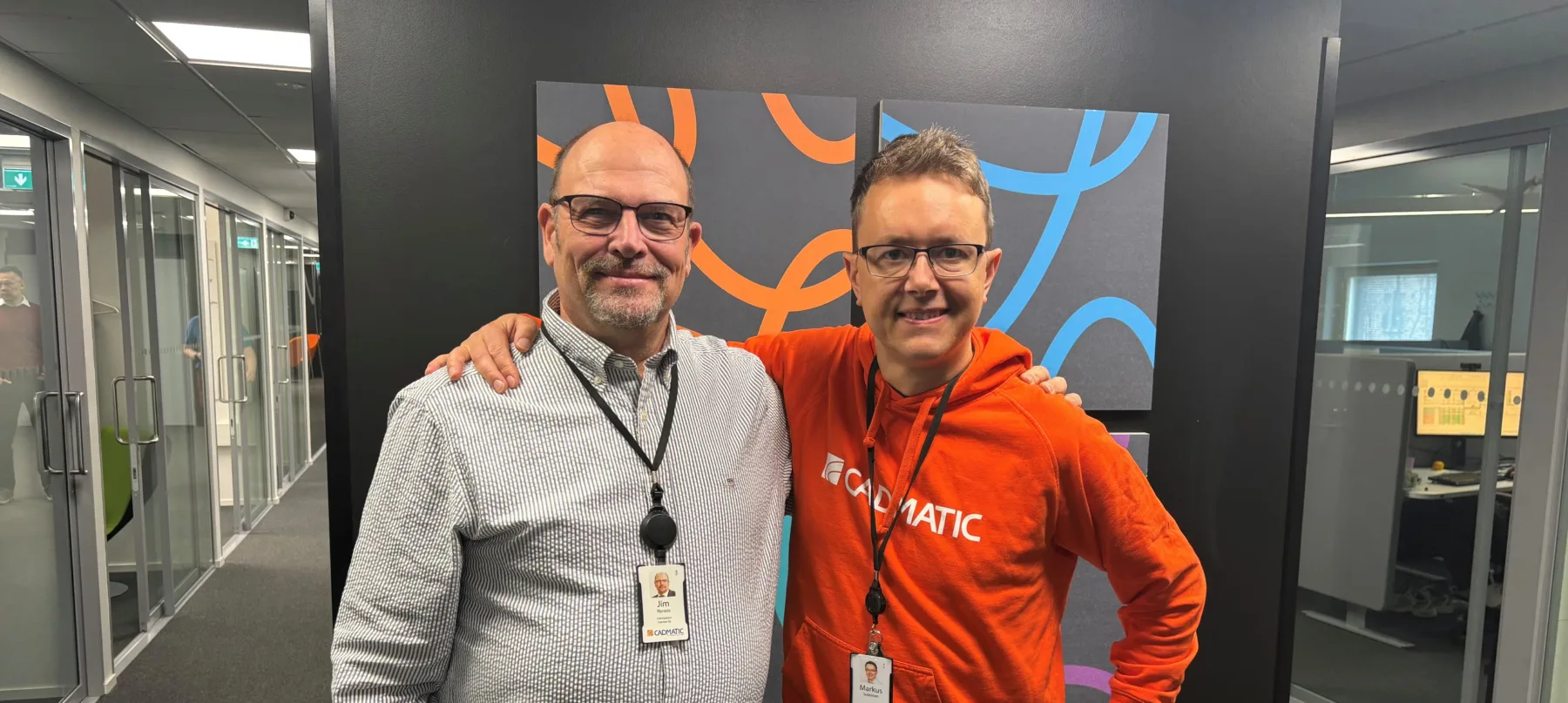
On November 19, around 30 organizations gathered in Stockholm for IBM’s event, The Evolution of Digitalization in Asset & Maintenance Management. Mining companies sat next to rail operators. Utilities sat next to breweries and manufacturers. Their assets look nothing alike, yet everyone in the room was wrestling with the same thing.
Critical equipment has to keep running while the business grows, and the people who know that equipment best are retiring faster than new experts can learn it.
IBM framed its role in two short lines: assets keep work running, and IBM helps keep assets running. Getting there takes logical thinking and better use of digital tools, an approach IBM calls asset management 5.0. In this model, reliability, asset management and maintenance work hand in hand.
The numbers show where time and knowledge slip away
IBM described the pressures shaping maintenance today. Growth and capital demands, a mix of new and aging assets, higher reliability stakes, AI ambitions and a tightening workforce all pull on the same teams. IBM’s figures show how organizations rank the challenges they face:
- 72% point to aging infrastructure and reliability issues
- 67% to data accessibility and fragmentation
- 56% to skills and workforce transition
- 45% to siloed ways of working and poor process integration
Fragmented data sits close to the top of that list. It came up again and again throughout the day.
AI in Maximo helps teams decide what to do next
AI is now widely available in IBM Maximo. Condition intelligence helps you understand the health of an asset and what action to take, and AI support can help you build the asset strategy itself. IBM also highlighted the Model Context Protocol (MCP), which makes it easier to bring information together across systems.
The practical advice was simple. Start with the low-hanging fruit. Find where your teams lose time today, and fix that first.
Five steps toward the future of asset management
IBM laid out a path where each step builds on the one before:
- Asset register, with a clear hierarchy and reliable data
- Asset reliability strategy
- Asset health analytics
- Asset condition monitoring, where Maximo can analyze factors such as probability of failure
- Asset management dashboard
Under all five sits data. One slide put it in four words: no data, no strategy.
A single pump shows why. Map everything connected to it and you find hierarchy and location, warranty terms, safety and lockout procedures, spare parts, sensor readings, failure codes, the RCM strategy, work orders and lifetime costs. That picture only stays useful when people keep feeding it through their day-to-day work.
Resistance to change means people care
A panel with Wärtsilä, Nexer and IBM took on the hardest part of any digital program: helping people adapt to new technology.
The panelists agreed that resistance is a sign that people care about their work. Treat it as input. Start by inspiring people with how things could be done, then help them see where they can contribute. Design thinking workshops gave participants room to think beyond their own domain.
Openness came up often. Involve people from every level and department, and be honest about the challenges along with the benefits. In workshops, listen closely and stay curious.
Then keep going. Change happens in small, persistent steps, and it takes real time and effort. The panel gave special weight to one factor: a strong executive sponsor is critical in any organization. When teams and systems truly connect, one plus one makes three.
Reliability is a wide topic that pulls in many teams, which is exactly why this matters.
We showed Maximo intelligence inside a digital twin
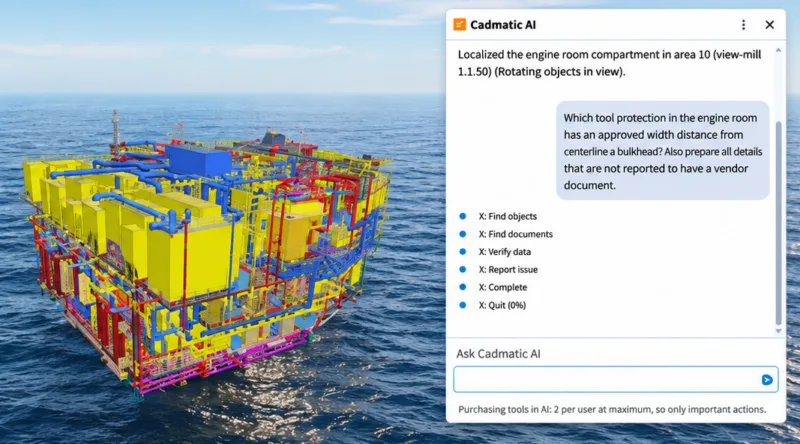
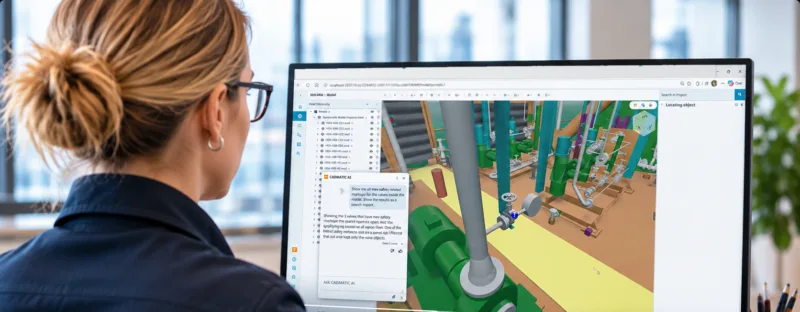
During the event, we demonstrated how Cadmatic eShare connects the intelligence in IBM Maximo to a digital twin of the facility. Maintenance planners, reliability engineers, operators and managers can each find the information they need within seconds.
Reliability data from Maximo appears as a heat map across the whole facility, so you see at a glance where attention is needed. The documents related to each asset are easy to reach, and locating a specific asset in the 3D model takes moments.
The analytics stay in Maximo. eShare gives that insight a visual, location-based context that a much wider group of people can use in their daily work.
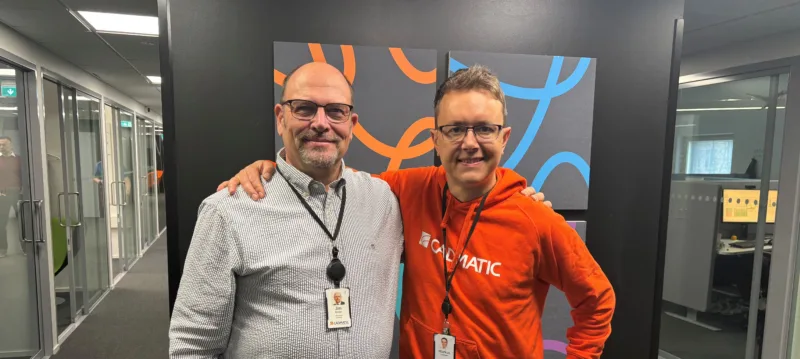
The reaction in the room stayed with us. We heard audible wows during the demo, and several companies came to us afterward with very positive feedback.
Connected data gives hard-won knowledge somewhere to live
As experienced people retire, their knowledge has to live somewhere the next generation can find and trust it. Connected asset data is that place. IBM Maximo brings the intelligence, and eShare puts it in the context your teams already recognize: the plant itself.
Thank you to IBM for hosting, to Wärtsilä and Nexer for an honest panel, and to everyone who stopped by to talk with us. If you’d like to see how eShare and Maximo work together for your facility, get in touch with our team.