How shipbuilding projects can catch problems before they turn red

A single shipbuilding project can run on a dozen systems that were never designed to talk to each other. CAD holds the geometry, moody and precise. ERP holds the commercial data, allergic to nuance. But the information a PDM or PLM system would typically bring together; documents, BOMs, lifecycle states, changes, and project context, is often scattered across the shipyard. The result is a project where the data exists, but the connections between it do not.
Each system has its place. The problem starts in the gaps between them. Someone spends part of the day hunting for the right drawing revision. An issue is logged in one system and resolved in another. Three departments hear about the same change in three different ways. If that sounds familiar, you already know how much time it costs.
That fragmentation is shipbuilding’s quiet cost center. Not one dramatic failure, but hundreds of small delays every week.
A status board that made the rollout visible
That gap between silos and shared truth was the focus of a Cadmatic Wave session alongside SMM in Hamburg. Among other topics related to shipyard digitalization, the session looked at a recent full-scope Wave rollout on a research vessel project.
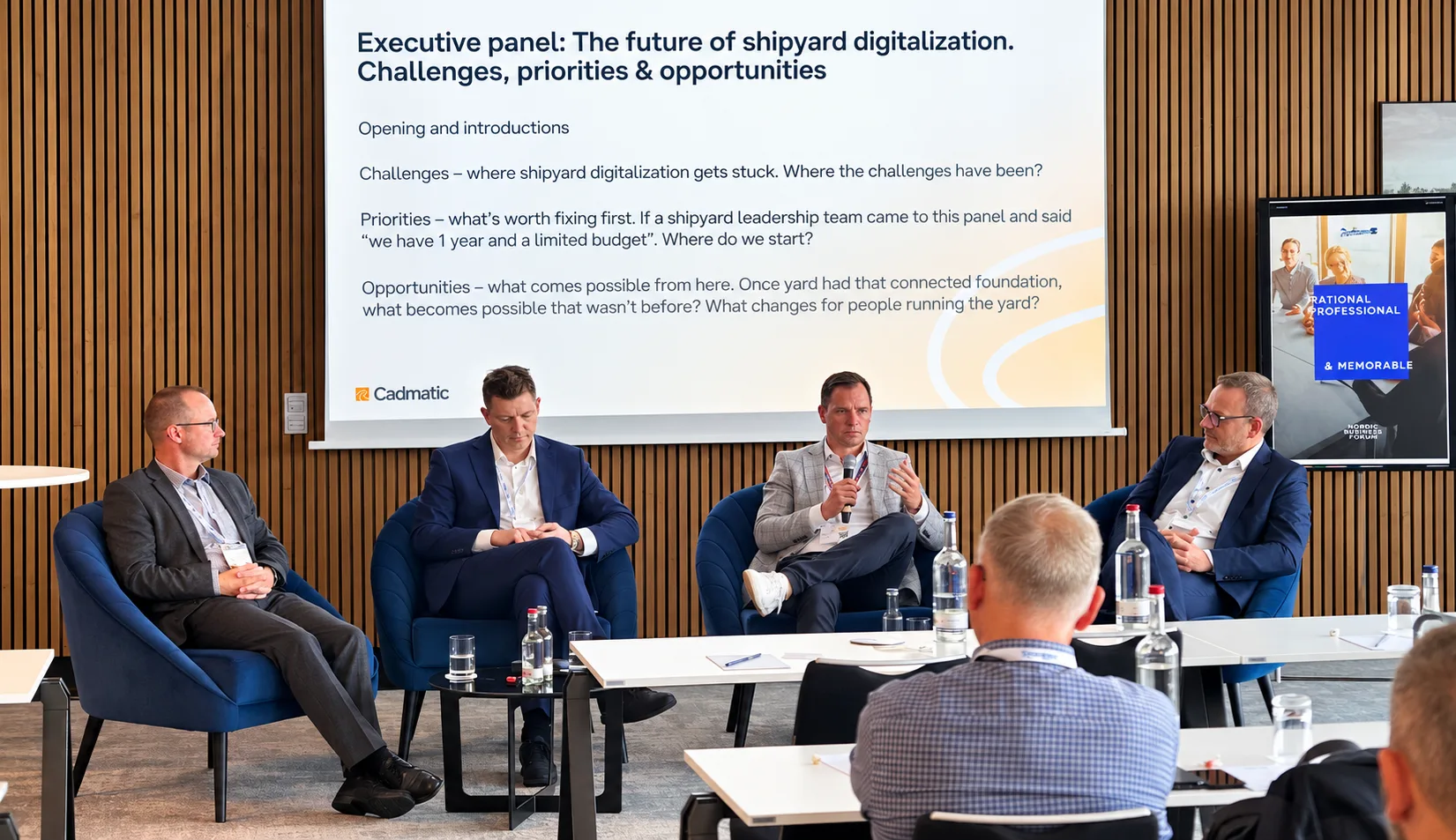
A growing number of users across different functions and organizations work with the same project data. It is a good illustration of what modern shipbuilding projects really look like: many teams and stakeholders working together across organizational boundaries.
The project tracked its progress with something remarkably simple: a color-coded map of process libraries covering nearly a dozen areas, from document and part management to issues, changes, risk, claims, and warranty.
Green meant ready. Yellow meant preliminary. Grey meant no process map yet. Orange and red showed areas where the underlying library had not yet been built into the PDM or CAD environment.
Simple, but effective. Sailors have used a plain yellow flag for centuries to tell a harbor much the same thing: all clear, nothing to worry about, safe to come alongside. This project borrowed the same honesty. At a glance, the team could see where the rollout actually stood, rather than where the plan said it should be. A yellow flag was not a failure. It was an early signal that something needed attention before it became a red one.
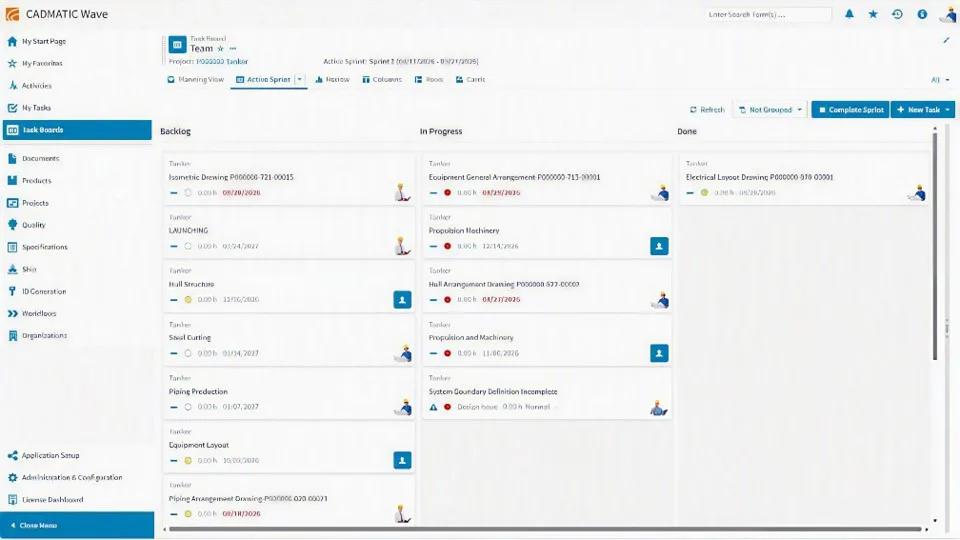
That matters because rollouts rarely stall because of one dramatic problem. More often, something slips quietly for months before the right people know about it. A visible status board closes that gap. It replaces “we think we’re on track” with a clear view of what is ready, what is not, and what needs attention. If you have ever run a rollout of your own, you know how easily that gap opens up.
The lessons behind the color play
A few insights about what a large-scale digitalization effort demands, if you are planning one of your own:
- Be realistic about schedules. Precise timelines look reassuring on a slide. Live projects rarely follow them.
- Put the internal team at the center. Your progress depends heavily on the people driving the change, and only a small number of people at any yard may have the time and position to do it.
- Plan for testing, release, training, and hypercare. They take time. Treating them as leftover capacity is asking for trouble.
None of this is a criticism of the software. It is a reminder that system rollout is a change management effort first and a software implementation second.
What Wave changes
This is the gap Wave is designed to close.
Instead of adding another point solution to your stack, Wave provides a shared environment for documents, issues, changes, risk, requirements, bills of materials, claims, and warranty data. The information can be accessed across the yard, owner, and supplier network rather than remaining locked inside individual systems.
And the process library does not start from zero. It is based on processes already verified across shipyards of different sizes. That gives new projects a starting point instead of forcing them to build every process from scratch.
For a yard looking at its own digital setup, that may be the more useful question: not just what a system can do, but how much time your team could stop spending on finding information it already has.
The technology is only part of the equation. A successful rollout still needs key users who understand the system, training that gets people onboard, and a project culture where yellow flags are raised early.
Wave provides the infrastructure for a shared view. The real value comes from using that visibility to act before small problems turn red.
Thank you for all the great conversations at SMM! If you missed the event, contact us for more information.